 Art
Art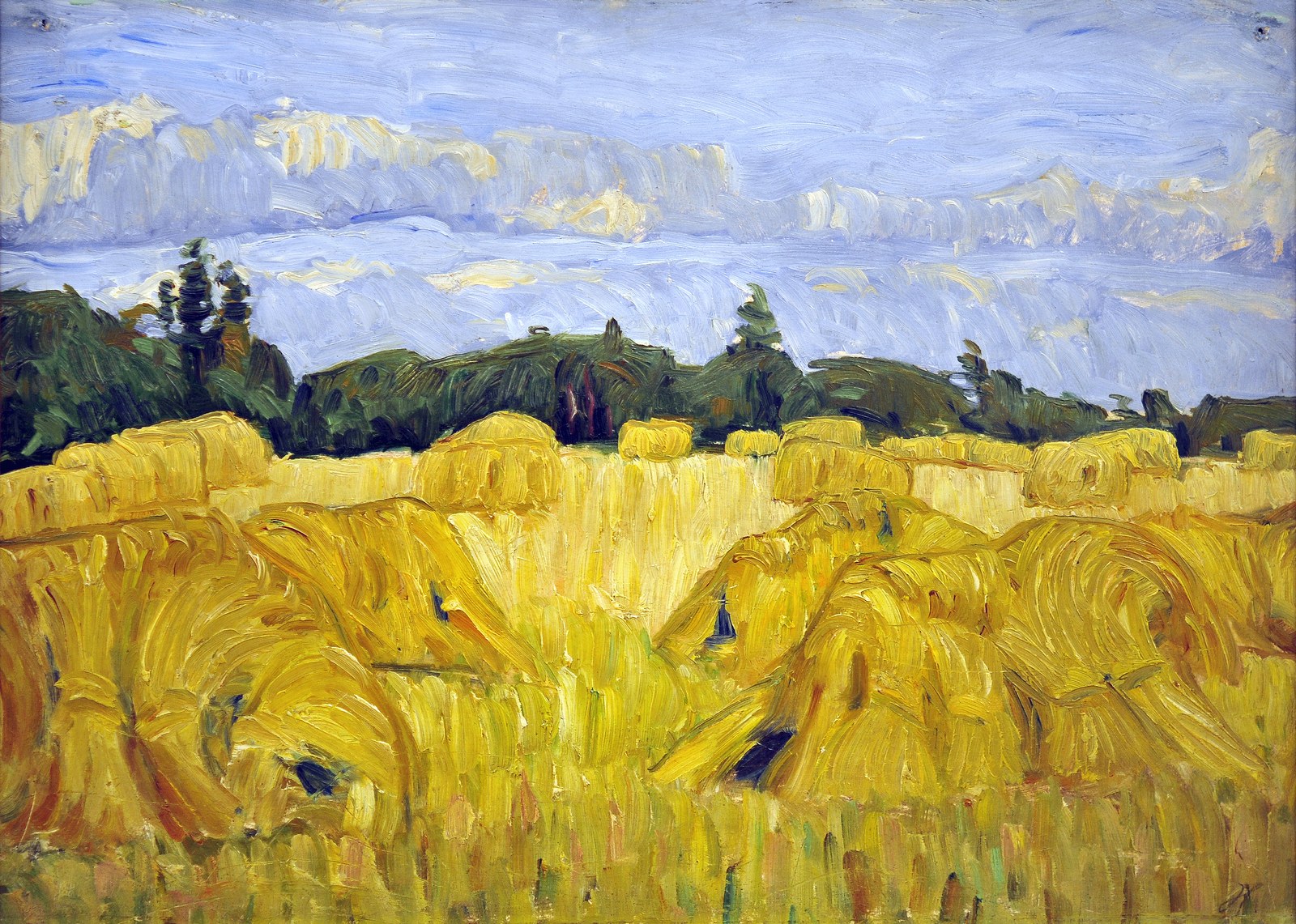
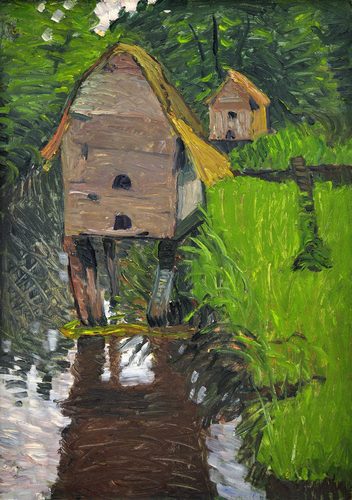
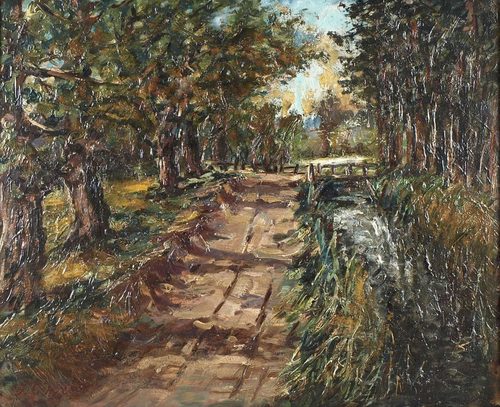
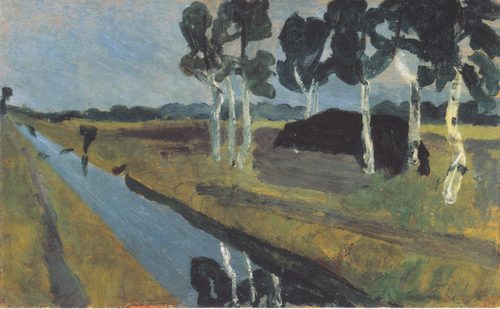
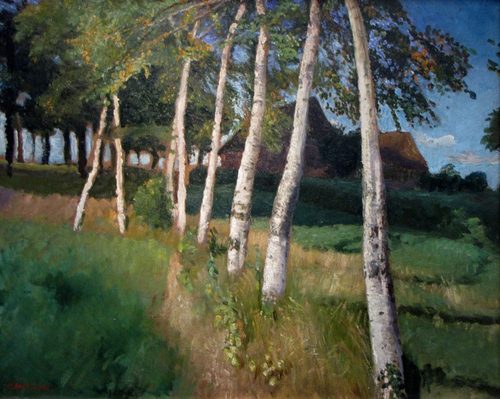
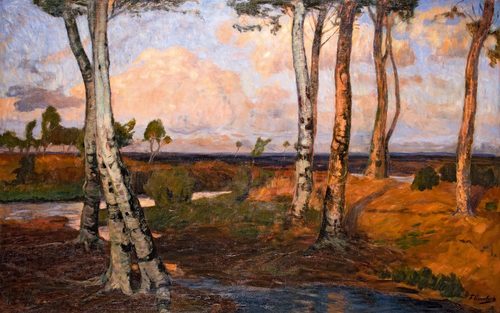
Worpswede is a village in the Teufelsmoor, a flat peat-bog district north of Bremen, that became Germany's most famous artist colony after 1889. Fritz Mackensen, Otto Modersohn, Hans am Ende, and Fritz Overbeck, trained in the tight academic realism of Düsseldorf and Munich, settled among thatched farmhouses and birch-lined canals looking for a landscape more atmospheric than any studio subject. There was no court or church funding this school; painters lived off sales, teaching, and eventually tourism, supported by dealers in Bremen and Munich rather than princely patrons. The moor itself, flat to the horizon, cut by drainage canals, dotted with sheep and solitary birches under enormous skies, supplied the school's subject matter almost exclusively. Heinrich Vogeler added a Jugendstil strand at his house Barkenhoff, designing furniture and books alongside paintings. Paula Modersohn-Becker, arriving in 1898, pushed the colony's naturalism toward an early, personal Expressionism before her death in 1907, giving Worpswede a second, more radical legacy.
What marks the region
Moor as subject
Nearly every canvas returns to the Teufelsmoor itself: flat peat bog, drainage canals, birch trunks, and huge skies, painted repeatedly rather than treated as backdrop for narrative scenes.
Plein air observation
Artists worked outdoors directly on the moor rather than composing from sketches in the studio, chasing changing light and weather across the flat, unbroken horizon.
Muted, earthen palette
Ochres, mossy greens, and grey-browns dominate, echoing peat, thatch, and wet soil rather than the bright color favored by contemporaries in Munich or Paris.
Cooperative colony life
Founders shared a rented farmhouse, exhibited together, and built houses side by side, creating a working community rather than a loose gathering of individual studios.
Thatched vernacular architecture
Local farmhouses with steep thatched roofs recur as motifs, painted with the same close attention given to the moor, tying the school to regional building traditions.
Naturalism edging into mood
Early canvases stayed close to academic realism, but by the 1900s some members, especially Paula Modersohn-Becker, simplified form toward an early German Expressionism.
Local signatures
How to spot Worpswede art
- Birch trees
- → Slender white trunks against dark moor soil, the colony's most repeated single motif and shorthand for the region.
- Peat canals
- → Straight drainage channels cutting the moor, evidence of centuries of peat-cutting that shaped the land artists painted.
- Thatched farmhouses
- → Steep-roofed vernacular houses standing for the rural life the colony idealized against industrializing Germany.
- Flat, wide horizon
- → A near-featureless skyline emphasizing scale and solitude, distinct from mountainous Alpine or Rhine landscape painting.
- Shepherd and flock
- → A lone figure with sheep, a stock motif for the moor's sparse human presence and slow rural time.
- Dusk or storm sky
- → Heavy, mood-laden clouds over the flat land, carrying the emotional weight the terrain itself lacks.
The story
Worpswede's colony began in 1889 when Fritz Mackensen, followed within months by Otto Modersohn, Hans am Ende, and Fritz Overbeck, left academic training in Düsseldorf for the Teufelsmoor. Mackensen's 1895 exhibition at Munich's Glaspalast, including 'Gottesdienst im Freien,' brought national attention and drew more settlers. Heinrich Vogeler joined and built Barkenhoff, a house and later a Jugendstil workshop, while poet Rainer Maria Rilke visited from 1900 and wrote the colony's first monograph in 1903. Paula Becker arrived in 1898, married Otto Modersohn in 1901, and spent formative months in Paris studying Cézanne and Gauguin before returning to Worpswede with a flattened, simplified style far from the group's naturalism. She died in 1907 shortly after childbirth. The colony's exhibition hall, the Große Kunstschau, opened in 1927, and Worpswede continued attracting painters, craftspeople, and, later, tourists through the twentieth century, its identity fixed to the moor landscape first painted in 1889.
Masterpieces of the place
| Work | Artist | Date | Why it matters |
|---|---|---|---|
| Gottesdienst im Freien | Fritz Mackensen | 1895 | Exhibited in Munich, this breakthrough work first brought the colony national attention. |
| Herbstabend im Moor | Otto Modersohn | 1895 | A moody moor landscape typical of the colony's early, close observation of light and weather. |
| Selbstbildnis am 6. Hochzeitstag | Paula Modersohn-Becker | 1906 | A self-portrait showing the flattened, simplified style she developed beyond the colony's naturalism. |
| Sommerabend | Heinrich Vogeler | 1905 | A Jugendstil garden scene from Barkenhoff, showing Vogeler's decorative departure from moor realism. |
| Moor im Mondlicht | Fritz Overbeck | c. 1900 | A nocturnal moor scene representative of the colony's core landscape subject and muted palette. |
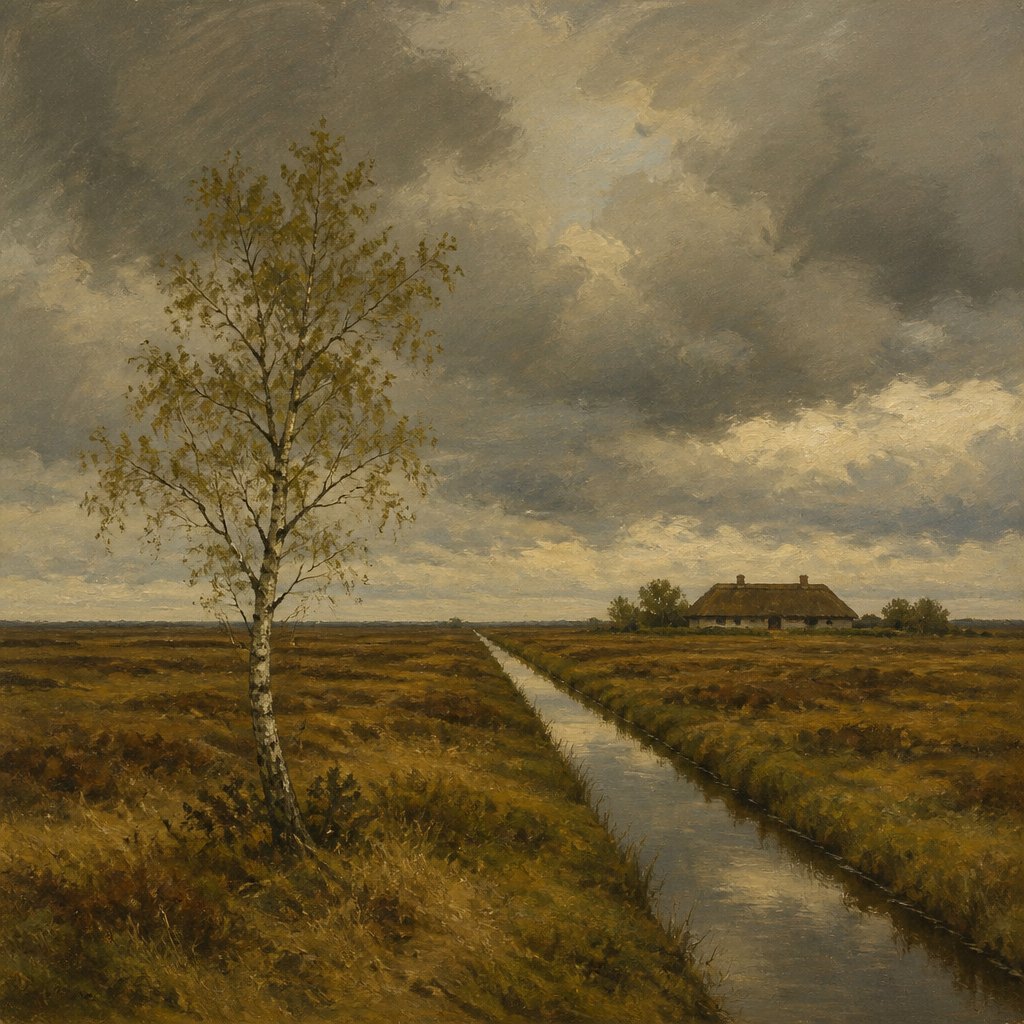 AI-generated
Work en plein air
Paint in the light of Worpswede
This example was generated from a prompt like: “A flat peat bog under a heavy, moody sky, a lone birch tree beside a straight drainage canal and a low thatched farmhouse on the horizon, painted in muted ochre and moss-green tones with visible outdoor brushwork.”
Open the Worpswede Art Style generator →The place today
Worpswede remains a small village organized around its art history. The Große Kunstschau and the Barkenhoff, Heinrich Vogeler's restored house, function as museums, and a dedicated Paula Modersohn-Becker museum holds her paintings and drawings. Thatched farmhouses and the Teufelsmoor itself are largely unchanged, walkable on marked routes past the sites painters worked from. Ceramics, weaving, and other applied crafts continue in workshops descended from Vogeler's Jugendstil ventures, and the village draws visitors for both its collections and its preserved moor scenery.
Compose your own
Set the scene on flat, open ground: a peat bog cut by a straight canal, one or two bare birch trunks, a thatched farmhouse low on the horizon. Push the sky high and heavy, doing more emotional work than any figure in the frame. Mix a muted, earthen palette, ochre, moss green, grey-brown, avoiding bright or saturated color entirely. Work the paint with visible, direct brushwork rather than smooth finish, as if painted outdoors in changing weather. Keep human presence minimal, a distant shepherd or a solitary farmhouse window, and let flatness and scale stand in for narrative. For a later, more radical version, simplify forms further and flatten depth, echoing the shift toward Expressionism the colony's youngest painter brought to the same moor.
Frequently asked questions
What is the Teufelsmoor and why did painters go there?
It is a flat peat-bog district north of Bremen. Painters trained in academic Düsseldorf and Munich went there from 1889 seeking an atmospheric, unspoiled landscape of moor, birch, and big sky, unlike any studio subject.
Who founded the Worpswede colony?
Fritz Mackensen arrived first in 1889, soon joined by Otto Modersohn, Hans am Ende, and Fritz Overbeck. Heinrich Vogeler and later Paula Modersohn-Becker joined within the following decade.
Is Paula Modersohn-Becker's work typical of Worpswede?
Only partly. She trained within the colony's naturalism but, after studying in Paris, simplified form toward an early Expressionism that went beyond the moor-landscape style most Worpswede painters kept.
Can you still see the landscapes the colony painted?
Yes. The Teufelsmoor and Worpswede's thatched farmhouses remain largely intact, and the Große Kunstschau and Barkenhoff museums hold work painted directly from these surroundings.