 Art
Art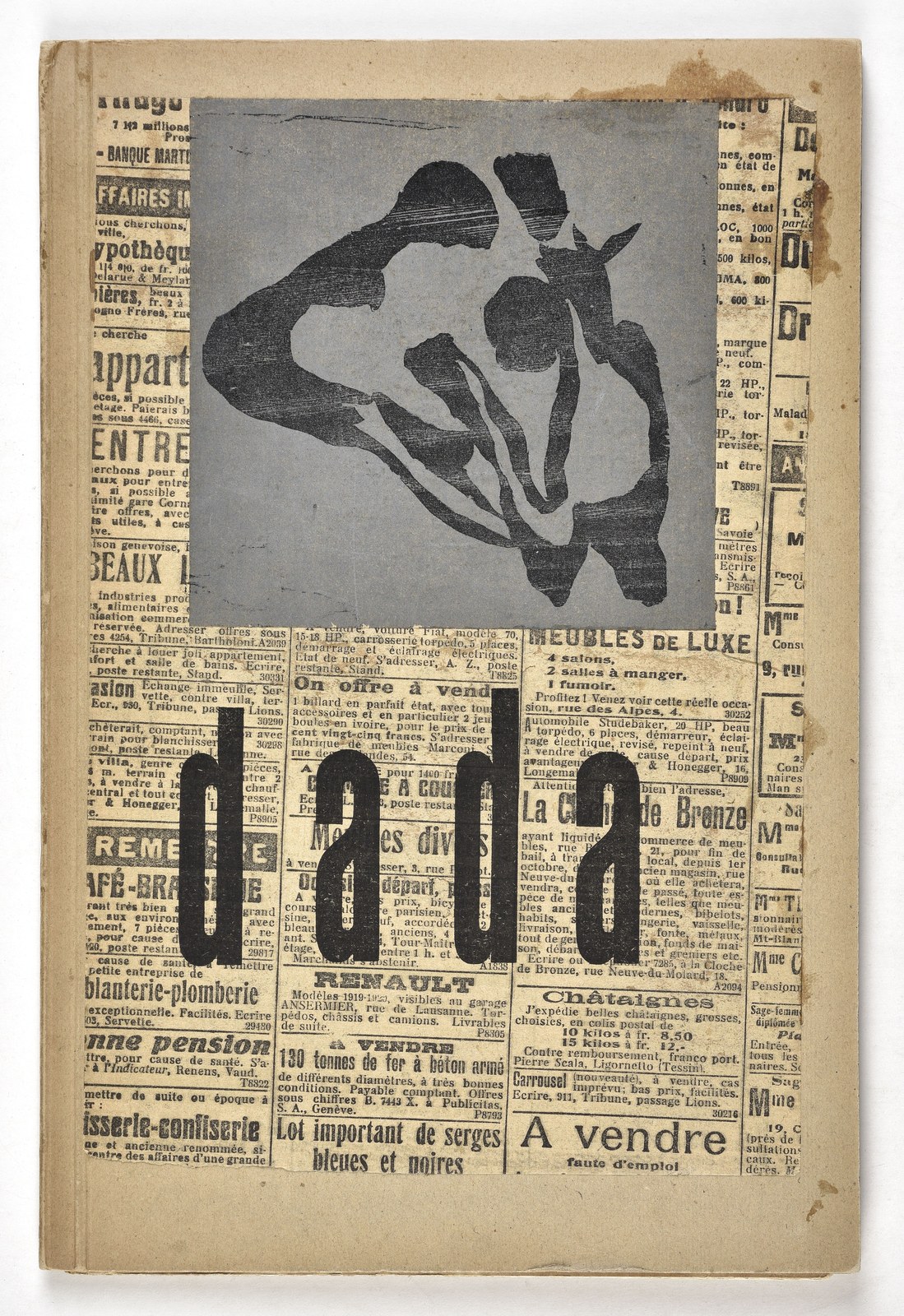
Zurich became an art center twice in the twentieth century, through opposite methods. Switzerland's neutrality during World War One turned the city into a refuge for exiled writers and artists, and in 1916 Hugo Ball, Emmy Hennings, Tristan Tzara, Marcel Janco, and Richard Huelsenbeck opened Cabaret Voltaire, launching Dada as a deliberate assault on rational art and language through collage, sound poetry, and absurdist performance. No patron funded this; it ran on cabaret admission and shared defiance. A second, unrelated wave followed from the 1930s through the 1950s, when Max Bill, trained partly at the Bauhaus, developed Concrete Art with Richard Paul Lohse, Camille Graeser, and Verena Loewensberg, rejecting expression and symbol for compositions built from measurable color and geometric systems. This movement drew on Zurich's strengths in precision industry, printing, and graphic design, and fed directly into the Swiss Style of typography that spread from the city's design schools after 1950. Kunsthaus Zurich now holds both legacies side by side.
What marks the region
Chance and absurdity
Dada performances and texts used deliberate nonsense, chance-arranged words, and clashing costumes to sabotage conventional meaning rather than build a coherent image.
Collage and cut type
Torn newspaper, mismatched typefaces, and pasted fragments replaced drawn composition, treating found printed material as raw color and shape.
Sound and performance
Cabaret Voltaire evenings combined masks, simultaneous poems, and invented languages, making live, unrepeatable performance as central as any object on a wall.
Mathematical color systems
Concrete artists built compositions from predetermined numerical series governing color and interval, removing personal gesture in favor of calculable, repeatable structure.
Anonymous, precise surface
Flat, hard-edged paint application erased visible brushwork, matching the movement's insistence that a work should look planned rather than felt.
Design-industry crossover
Many Concrete artists also worked in advertising and typography, and the same grid logic moved freely between gallery paintings and printed graphic design.
Local signatures
How to spot Zurich art
- Collaged newsprint
- → Torn, pasted newspaper fragments signal Dada's rejection of conventional composition and its distrust of printed authority.
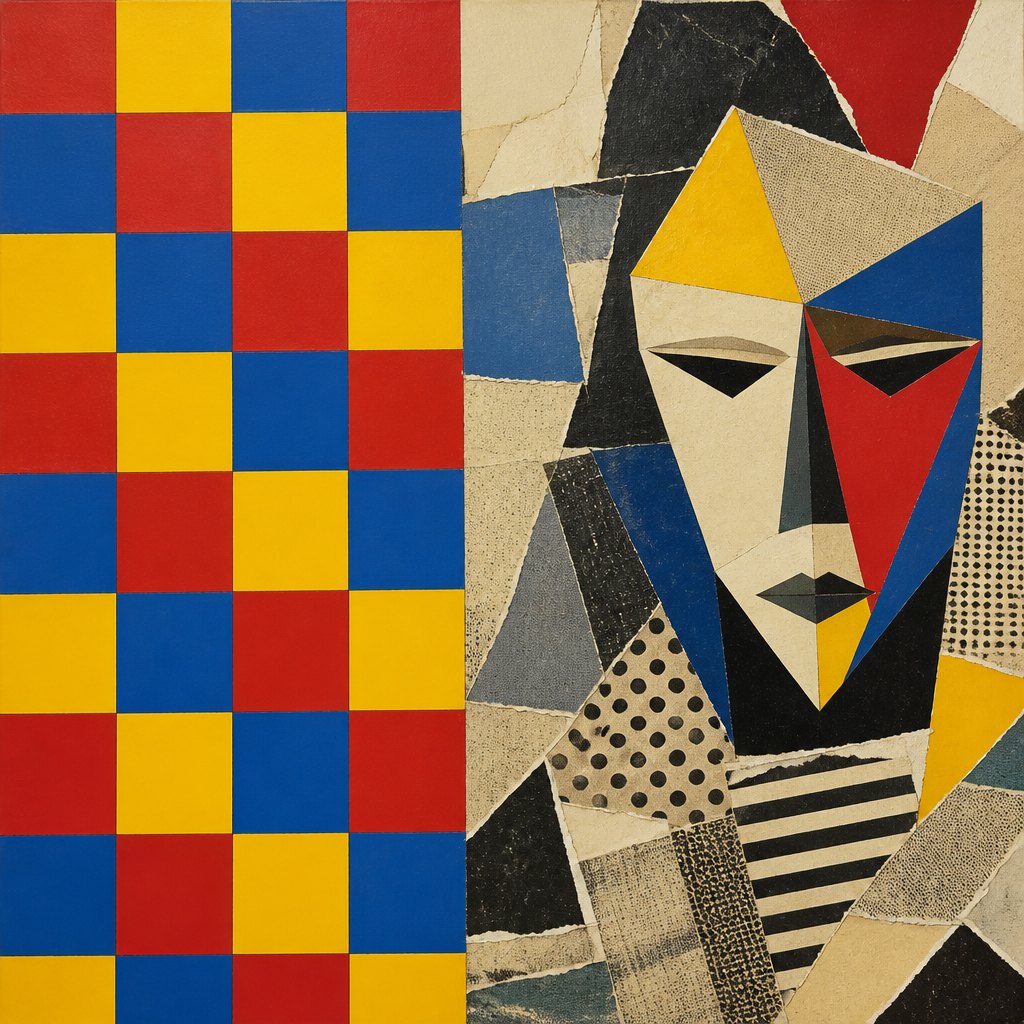
- Geometric masks
- → Angular painted masks worn in Cabaret Voltaire performances, marking Dada's turn away from the naturalistic human face.
- Primary-color grid
- → Flat squares or circles in red, yellow, and blue arranged by numerical rule, the core visual signature of Zurich Concrete Art.
- Nonsense typography
- → Mismatched letterforms and invented words standing in for Dada's attack on rational language.
- Guild-house facade painting
- → Painted coats of arms and figures on medieval Zunfthäuser along the Limmat, an older civic art tradition predating both modern movements.
- Modular color series
- → Repeated, systematically varied color bands used by Concrete painters to make the underlying mathematical rule visible in the finished work.
The story
Cabaret Voltaire opened at Spiegelgasse 1 on 5 February 1916, founded by Hugo Ball and Emmy Hennings and quickly joined by Tristan Tzara, Marcel Janco, and Richard Huelsenbeck. Within months their nightly mix of sound poetry, masked performance, and manifestos coined the name Dada; Ball's 1916 sound poem 'Karawane' and Janco's masks became emblematic. By 1917 the group had moved to the Galerie Dada, and after the war most members dispersed to Berlin, Paris, and beyond, carrying Dada's methods with them. Zurich's second wave began later: Max Bill, who studied at the Bauhaus in Dessau from 1927 to 1929, returned to Zurich and by the mid-1930s was showing geometric abstraction alongside Richard Paul Lohse, Camille Graeser, and Verena Loewensberg. The group, later associated with the Allianz exhibiting society founded in 1937, formalized Concrete Art's rejection of symbol and gesture through the 1940s and 1950s, work still held today across the Kunsthaus Zurich's twentieth-century collections.
Masterpieces of the place
| Work | Artist | Date | Why it matters |
|---|---|---|---|
| Cabaret Voltaire poster | Marcel Janco | 1916 | A woodcut announcement for the cabaret's opening nights, one of the earliest surviving Dada graphic works. |
| Mask | Marcel Janco | c. 1919 | Angular painted cardboard mask worn in Dada performance, later recreated after the originals were lost. |
| Fifteen Variations on a Single Theme | Max Bill | 1938 | A serial print portfolio deriving all fifteen images from one geometric formula, a founding statement of Concrete Art. |
| Fünfzehn systematische Farbreihen | Richard Paul Lohse | 1950-1967 | Color fields generated from a fixed numerical system, worked and reworked over nearly two decades. |
| Untitled composition | Verena Loewensberg | c. 1950s | A hard-edged geometric abstraction typical of her contribution to Zurich Concrete Art, most of her works left formally untitled. |
 AI-generated
Work en plein air
Paint in the light of Zurich
This example was generated from a prompt like: “A flat grid of red, yellow, and blue squares arranged by strict numerical sequence, paired in imagination with a torn-newspaper collage bearing mismatched typefaces and an angular geometric mask.”
Open the Zurich Art Style generator →The place today
Cabaret Voltaire's original venue at Spiegelgasse 1 operates today as a cultural center and small museum on Dada. Kunsthaus Zurich holds major Dada and Concrete Art collections, including works by Janco, Bill, and Lohse, while the Museum für Gestaltung Zurich traces the design-school lineage that grew from Concrete Art into Swiss graphic design. The medieval guild houses along the Limmat's banks still show their painted facades. Zurich's design and advertising industries continue to draw on the grid-based visual language the city's Concrete artists established.
Compose your own
For a Dada-era look, work with torn and pasted paper: mismatched newspaper type, off-register printing, and geometric masks or costume elements assembled with deliberate clash rather than harmony. Let words and images collide without narrative logic. For the later Concrete look, switch entirely to hard edges and flat, unmodulated color, red, yellow, blue, black, and white, arranged in a grid or numerical sequence rather than an intuitive composition. Remove all visible brushwork and any trace of the hand; a ruler and a predetermined color plan should decide every shape's size and placement. Choose one approach and commit fully, since the two Zurich styles work by opposite logic, chance versus calculation, and mixing them undoes the point of either.
Frequently asked questions
Why did Dada begin in Zurich specifically?
Switzerland stayed neutral in World War One, and Zurich became a refuge for artists and writers fleeing the war elsewhere in Europe. That displaced, anti-establishment mood shaped Dada's founding at Cabaret Voltaire in 1916.
What is Zurich Concrete Art?
A mid-twentieth-century movement led by Max Bill and colleagues that built paintings from measurable color and geometric systems rather than expression or symbol, developing in Zurich from the 1930s through the 1950s.
Are Dada and Concrete Art related movements?
Not directly. They share only a city and roughly two decades apart; Dada was chance-driven and anti-rational, while Concrete Art was calculated and systematic, almost its opposite in method.
Where can Zurich Dada and Concrete Art be seen today?
Cabaret Voltaire's original venue is a museum, Kunsthaus Zurich holds major collections of both movements, and the Museum für Gestaltung traces the link to Swiss graphic design.