 Art
Art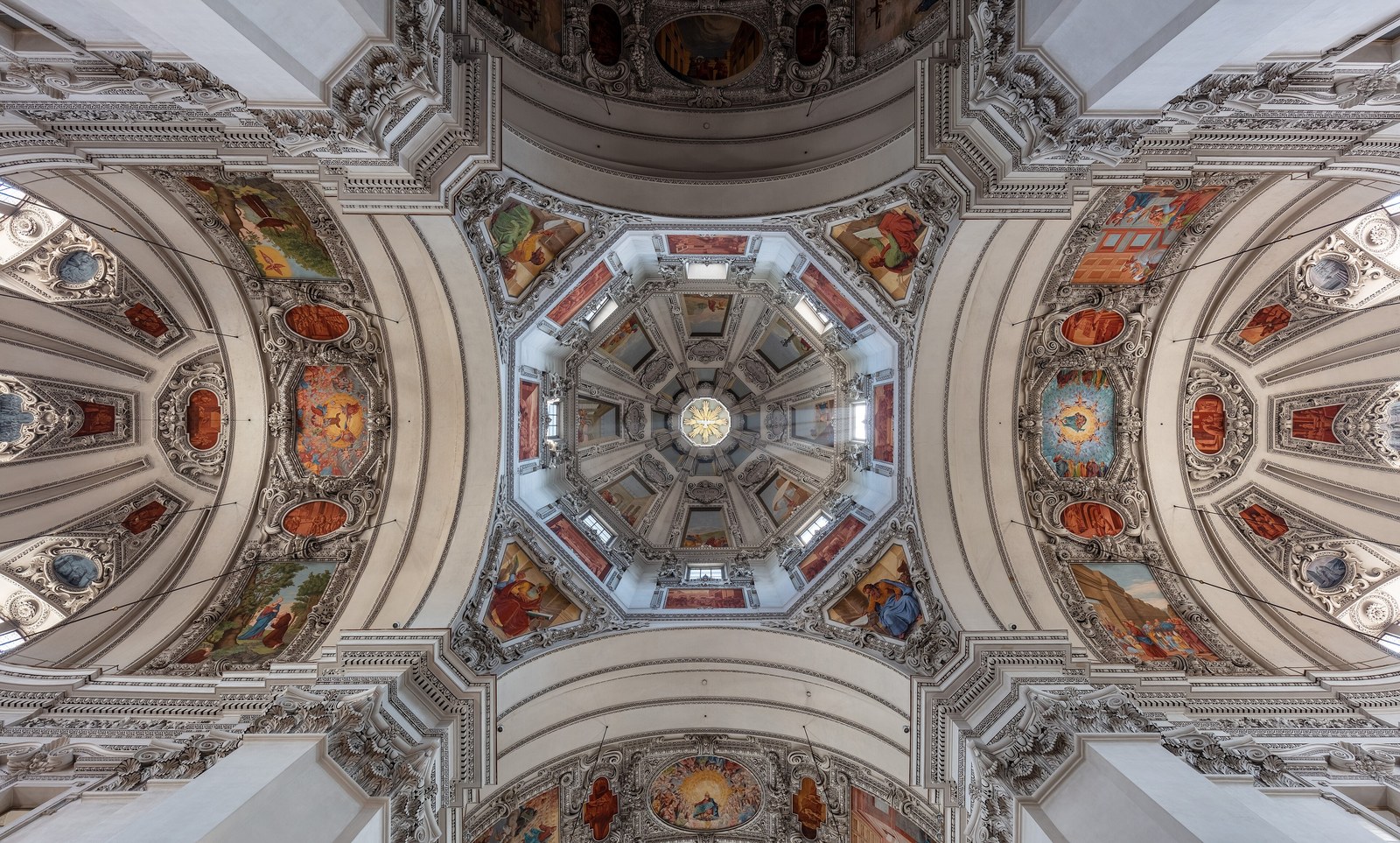
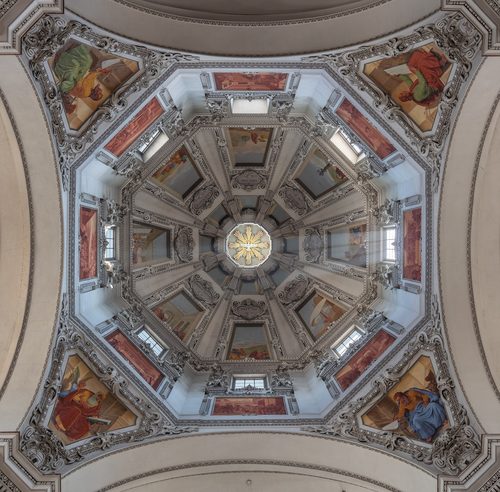
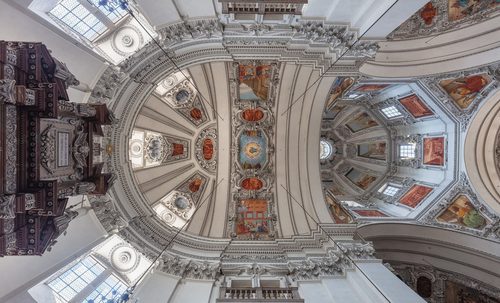
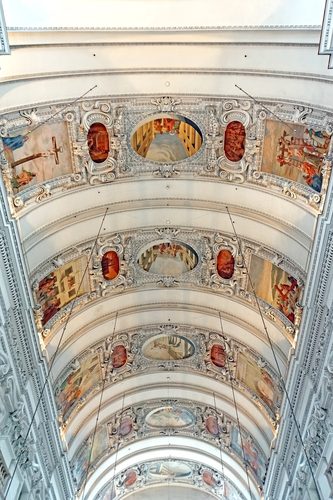
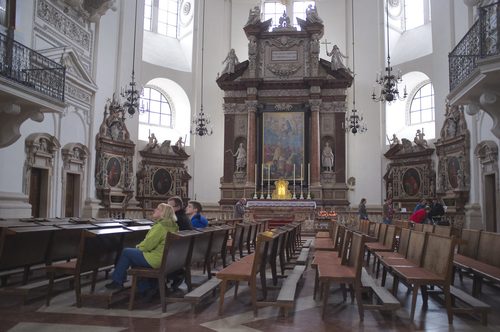
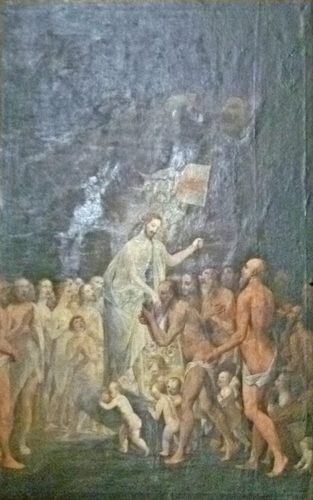
Salzburg, whose name comes from the salt trade that financed it, was ruled for centuries by prince-archbishops, ecclesiastical princes with full political independence within the Holy Roman Empire. That independence and salt revenue let them rebuild the city on Italian Baroque lines rather than following any single imperial court. After a 1598 fire, Prince-Archbishop Wolf Dietrich von Raitenau began an Italianizing campaign, importing architects and craftsmen familiar with Roman and Venetian models. His successors carried it further: Santino Solari completed Salzburg Cathedral in 1628, and Johann Bernhard Fischer von Erlach later designed churches with dramatic curved facades and dense fresco programs. Local grey Untersberg and reddish Adnet marble gave the architecture a distinctive material identity, while painters such as Johann Michael Rottmayr filled ceilings with illusionistic perspective opening onto painted sky. The result, a compact old town crowded with domes and towers, earned Salzburg its enduring nickname, Rome of the North, a title tied specifically to ecclesiastical rather than royal patronage.
What marks the region
Imported Italian expertise
Prince-archbishops recruited architects, stuccoists, and painters trained in Rome, Venice, or northern Italy, giving Salzburg's Baroque a directly Italian rather than locally invented character.
Dome-and-tower skyline
Churches were sited and massed to read together from a distance, producing the dense cluster of domes and twin towers that still defines the old town's silhouette.
Illusionistic ceiling fresco
Painted quadratura opened flat ceilings into false architecture and sky, a technique brought directly from Italian church decoration and applied across Residenz and church interiors alike.
Local marble facing
Grey Untersberg and reddish Adnet marble, quarried nearby, faced altars, columns, and floors, tying imported Italian design to visibly regional material.
Ecclesiastical rather than court patronage
Commissions came from the prince-archbishop's court and church institutions, not a separate royal or imperial patron, concentrating artistic direction in one office.
Concave-convex facades
Church fronts curve inward and outward in a single elevation, a dynamic Baroque device used repeatedly across Salzburg's churches to animate otherwise flat stone walls.
Local signatures
How to spot Salzburg art
- Prince-archbishop's mitre and crosier
- → Emblems of combined spiritual and secular rule, carved or painted onto facades and interiors across the city's churches.
- Untersberg grey marble
- → Locally quarried stone used for columns and altars, marking a building as part of Salzburg's specific Baroque material tradition.
- Trompe l'oeil sky ceilings
- → Painted illusions of open sky and false architecture above real vaults, standing for divine or princely elevation.
- Twin-tower church facade
- → Paired flanking towers on a curved front, a recurring silhouette across Salzburg's Baroque churches.
- Garden grotesque figures
- → Small carved dwarf and grotesque statues in palace gardens, a courtly decorative fashion distinct from church sculpture.
- Gilded stucco framing
- → Gold-leafed plaster ornament surrounding frescoes and altarpieces, marking wealth channeled through the archbishop's court rather than a secular ruler.
The story
Salzburg's wealth began with salt extraction from nearby Alpine mines, which funded prince-archbishops who ruled the city as independent ecclesiastical princes within the Holy Roman Empire. After fire damaged the old cathedral in 1598, Prince-Archbishop Wolf Dietrich von Raitenau, who had studied in Rome, began rebuilding the city on Italian models. His successor Markus Sittikus commissioned Santino Solari to design a new cathedral, consecrated in 1628. Through the later 1600s and early 1700s, Prince-Archbishops Guidobald and Johann Ernst von Thun brought in Johann Bernhard Fischer von Erlach, whose Kollegienkirche, built 1696 to 1707, and other churches gave the city its dramatic curved facades. Painter Johann Michael Rottmayr filled the Residenz and church ceilings with illusionistic fresco in the same decades. The prince-archbishopric's political independence ended with secularization in 1803, but its Baroque core survived largely intact, listed as a UNESCO World Heritage Site in 1996.
Masterpieces of the place
| Work | Artist | Date | Why it matters |
|---|---|---|---|
| Salzburg Cathedral | Santino Solari | 1614-1628 | Rebuilt in Italian Baroque style after fire, its dome-and-tower massing became the model for the city's skyline. |
| Kollegienkirche | Johann Bernhard Fischer von Erlach | 1696-1707 | A university church with a dramatic concave facade, among the high points of Austrian Baroque architecture. |
| Residenz ceiling frescoes | Johann Michael Rottmayr | c. 1700 | Illusionistic painted ceilings for the prince-archbishop's palace, opening flat vaults onto false sky and architecture. |
| Mirabell Garden dwarf statues | Bernhard Michael Mandl | c. 1715 | Carved grotesque garden figures for the Mirabell Palace, a courtly decorative counterpart to the city's church sculpture. |
| St. George's Chapel reliefs, Hohensalzburg | Unknown | c. 1502 | Late-medieval relief carving inside the fortress chapel, predating the city's Baroque transformation by a century. |
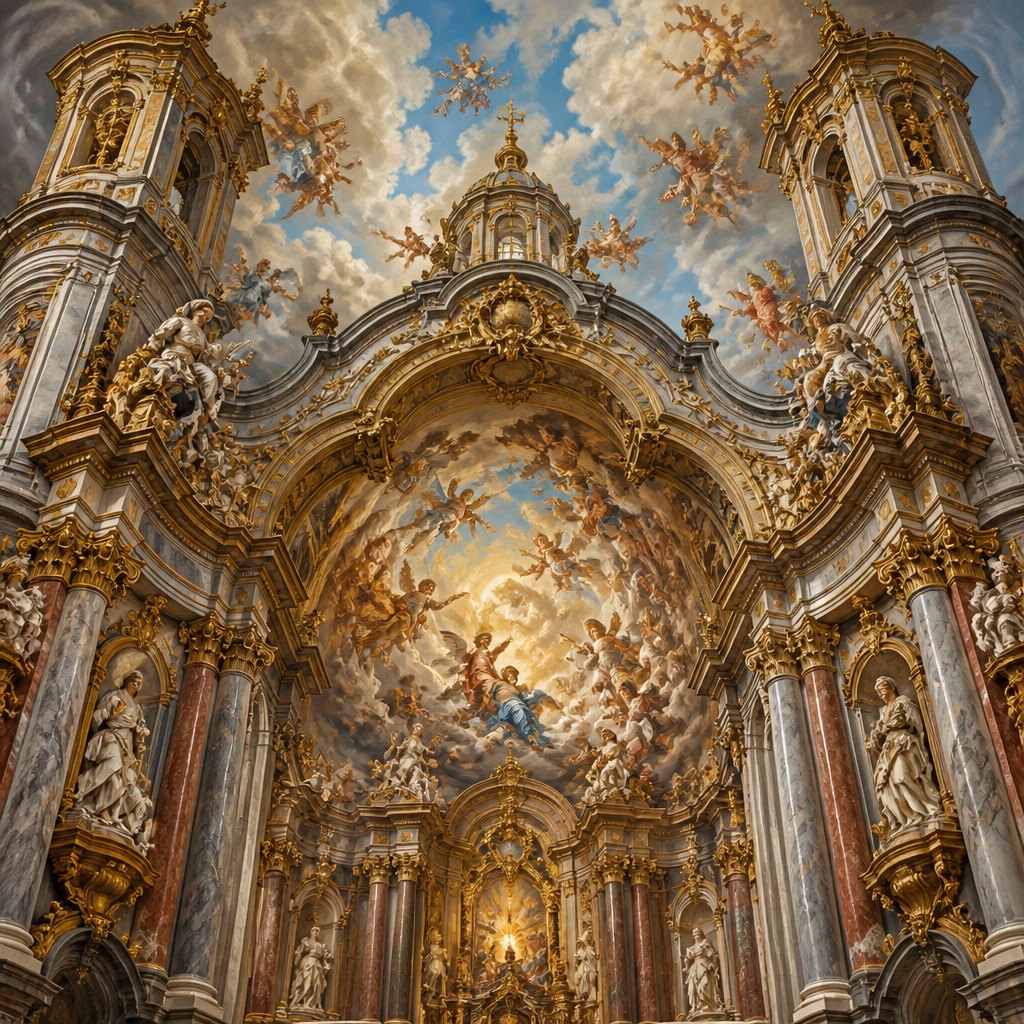 AI-generated
Work en plein air
Paint in the light of Salzburg
This example was generated from a prompt like: “A curved Baroque church facade with twin towers and a central dome, its interior ceiling opened by illusionistic fresco into painted sky, marble columns in grey and reddish stone, and gilded stucco framing every niche.”
Open the Salzburg Art Style generator →The place today
Salzburg's old town, largely unchanged since the eighteenth century, was listed as a UNESCO World Heritage Site in 1996. Salzburg Cathedral remains an active church, and the Residenzgalerie displays Baroque paintings within the prince-archbishop's former state rooms. Mirabell Palace gardens, with their carved dwarf statues, stay open to the public, and Hohensalzburg Fortress functions as a museum above the city. Conservation workshops in the old town continue restoring Baroque stucco, marble, and fresco, keeping the historic techniques in active use.
Compose your own
Give any Salzburg-style scene a curved, concave-convex facade rather than a flat front, and top it with a dome flanked by twin towers. Inside, open a flat ceiling into illusionistic fresco: painted false architecture and sky, receding in forced perspective as if the roof had disappeared. Face columns and altar elements in grey or reddish marble, and frame paintings and niches in gilded stucco rather than plain molding. Keep figures in swirling drapery caught in dynamic, diagonal poses typical of Baroque sculpture and fresco, avoiding static frontal arrangement. Reserve small grotesque or dwarf carvings for garden settings rather than church interiors, keeping ecclesiastical and courtly decoration visually distinct even within the same Baroque vocabulary.
Frequently asked questions
Why is Salzburg called the 'Rome of the North'?
Its old town concentrates domed and twin-towered Baroque churches designed largely by Italian-trained architects, a density and style of ecclesiastical building that visually echoes Rome's own skyline.
Who were the prince-archbishops and why did they matter for art?
They were Salzburg's rulers, combining church and state authority with full political independence, and salt-trade revenue under their control funded the city's Italian-style Baroque rebuilding from the late 1500s onward.
Who designed Salzburg's most famous Baroque buildings?
Santino Solari designed Salzburg Cathedral, completed 1628, and Johann Bernhard Fischer von Erlach designed the Kollegienkirche and other churches in the following decades, both working for the ruling prince-archbishops.
Is Salzburg's Baroque art connected to Vienna's imperial court?
No. Salzburg's Baroque architecture was funded and directed independently by its own prince-archbishops, not the Habsburg imperial court in Vienna, giving it a distinct ecclesiastical rather than dynastic character.