 Art
Art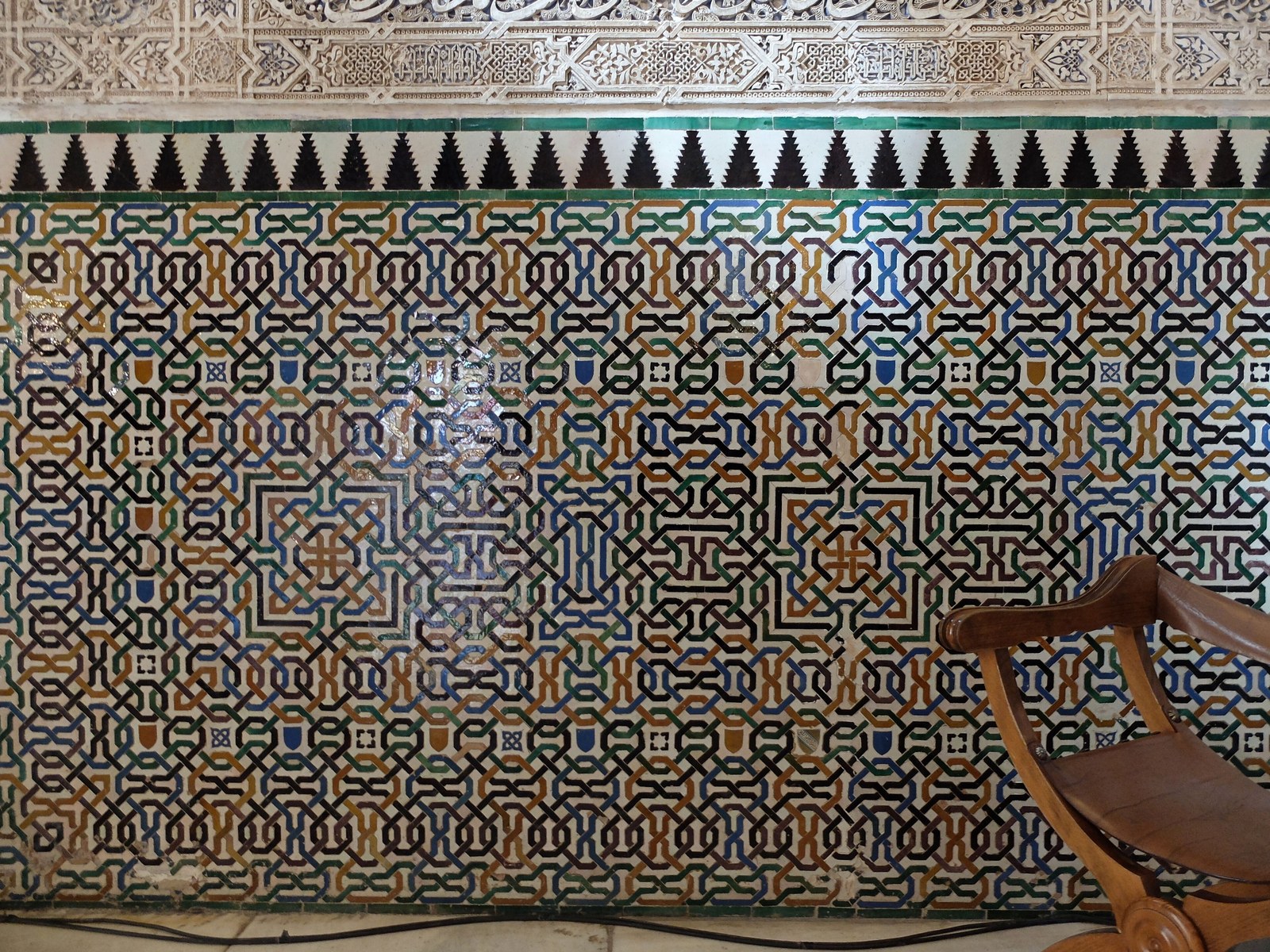
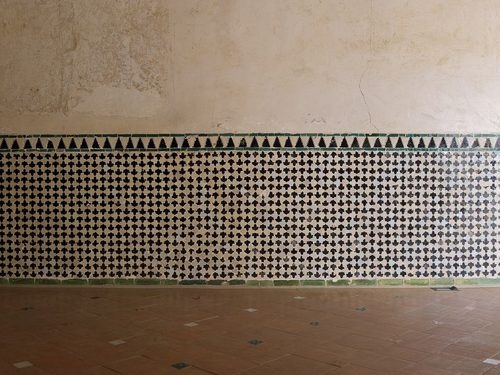
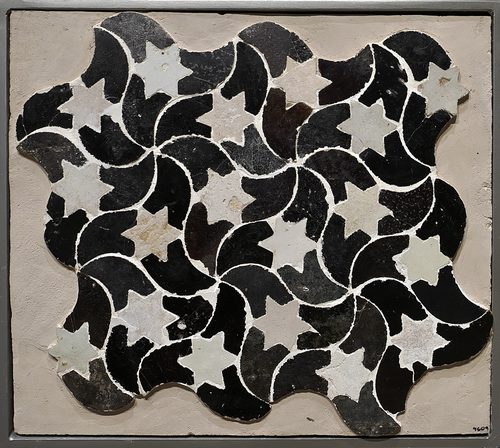
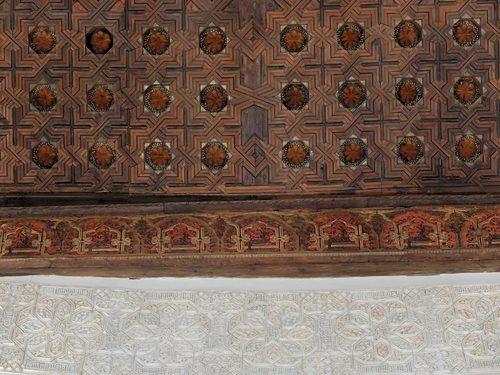
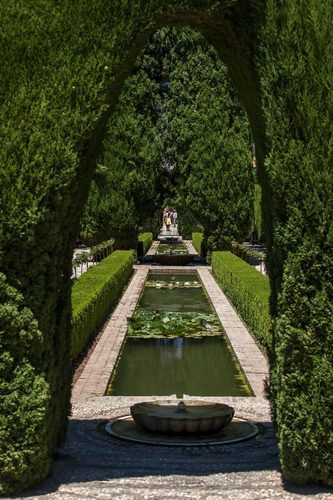
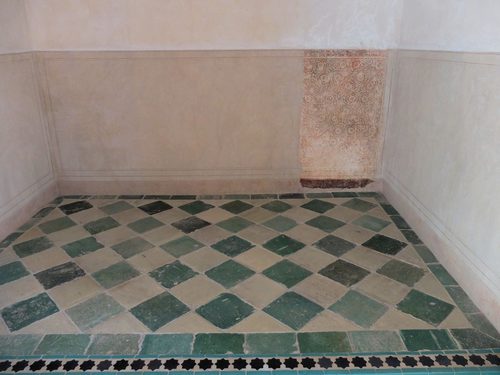
Granada's art is the palace decoration produced by the Nasrid dynasty, ruling the last independent Muslim kingdom in Iberia from 1238 until 1492. Cut off from the rest of Islamic Spain as Christian reconquest advanced, Nasrid sultans concentrated their wealth and craftsmen in a single citadel, the Alhambra, producing an unusually dense body of refined interior decoration. Sultans Yusuf I and Muhammad V, ruling through the mid-1300s, built its most celebrated halls and courtyards, employing craftsmen skilled in carved stucco, cut-tile mosaic, and geometric wood ceilings inherited from earlier Andalusi centers such as Córdoba and Seville. Figural imagery was avoided in this courtly context, so ornament developed through geometric pattern, vegetal arabesque, and calligraphy, including verses by court poet Ibn Zamrak carved directly into palace walls. Water, channeled through courtyards and pools, functioned as a decorative material equal to stone and tile.
What marks the region
Muqarnas vaulting
Honeycomb-like stalactite plaster cells lining domes and niches, dissolving the structural transition between wall and ceiling into pure light-catching ornament.
Alicatados tile mosaic
Geometric star-and-polygon patterns pieced from individually cut glazed tiles, used as wainscoting along the lower walls of major halls and courtyards.
Carved stucco (yesería)
Upper wall surfaces covered in intricate low-relief plaster ornament, once painted and gilded, combining vegetal arabesque with continuous calligraphic bands.
Epigraphic decoration
Poetic and devotional inscriptions in Arabic calligraphy run as continuous friezes, some composed specifically to describe the room they decorate.
Courtyard-and-water planning
Palace rooms organize around reflecting pools and narrow channels, linking interiors to open courtyards and using water as a structural design element.
Geometric abstraction
Absence of figural imagery in religious and courtly settings led to endlessly interlocking geometric and vegetal pattern as the primary decorative language.
Local signatures
How to spot Granada art
- Eight-pointed star pattern
- → A geometric motif built from interlocking squares, repeated across tile and stucco panels throughout the palace.
- Muqarnas honeycomb vault
- → Stalactite-like plaster cells lining domes, the signature ceiling treatment of Nasrid reception halls.
- Nasrid dynastic motto
- → The phrase 'there is no victor but God' carved repeatedly into walls, identifying a space as built for or by Nasrid rulers.
- Multifoil arch
- → A lobed arch shape framing doorways and windows, distinguishing Nasrid entrances from plain round or pointed arches.
- Reflecting pool
- → A long rectangular water basin mirroring surrounding architecture, central to Nasrid courtyard design.
- Vegetal arabesque (ataurique)
- → Stylized leaf and vine carving covering wall surfaces without repeating a human or animal figure.
The story
The Nasrid dynasty founded the Emirate of Granada in 1238, the last independent Muslim state in Iberia as Christian kingdoms advanced across the peninsula. Sultan Yusuf I, ruling 1333-1354, built the Comares Palace and its Hall of the Ambassadors, while his son Muhammad V, ruling 1354-1391, added the Palace of the Lions and its central fountain. Court poet Ibn Zamrak, active in the 1360s-1390s, composed verses carved directly onto palace walls, some describing the rooms they decorate. The Generalife summer residence, expanded across the same period, formed a terraced garden counterpart to the palace. Granada fell to the Catholic Monarchs Ferdinand and Isabella in January 1492, ending Muslim rule in Iberia. The Alhambra survived largely intact under Christian administration, though a Renaissance palace for Charles V was inserted into its grounds in the 1520s, and restoration from the 19th century onward secured its decoration.
Masterpieces of the place
| Work | Artist | Date | Why it matters |
|---|---|---|---|
| Court of the Lions | Unknown | c. 1370s | A marble-columned courtyard with a central fountain supported by twelve carved lions, heart of Muhammad V's palace. |
| Hall of the Ambassadors | Unknown | c. 1334-1354 | The largest throne room in the Alhambra, capped with a carved cedar dome under Yusuf I. |
| Comares Palace | Unknown | mid-14th century | The main royal reception complex built for Yusuf I, organized around a long reflecting pool. |
| Generalife gardens | Unknown | 13th-14th century | A terraced summer estate combining agricultural land with palace pavilions and water channels. |
| Hall of the Two Sisters | Unknown | c. 1370s | A domestic hall whose muqarnas dome is considered among the finest surviving examples of the technique. |
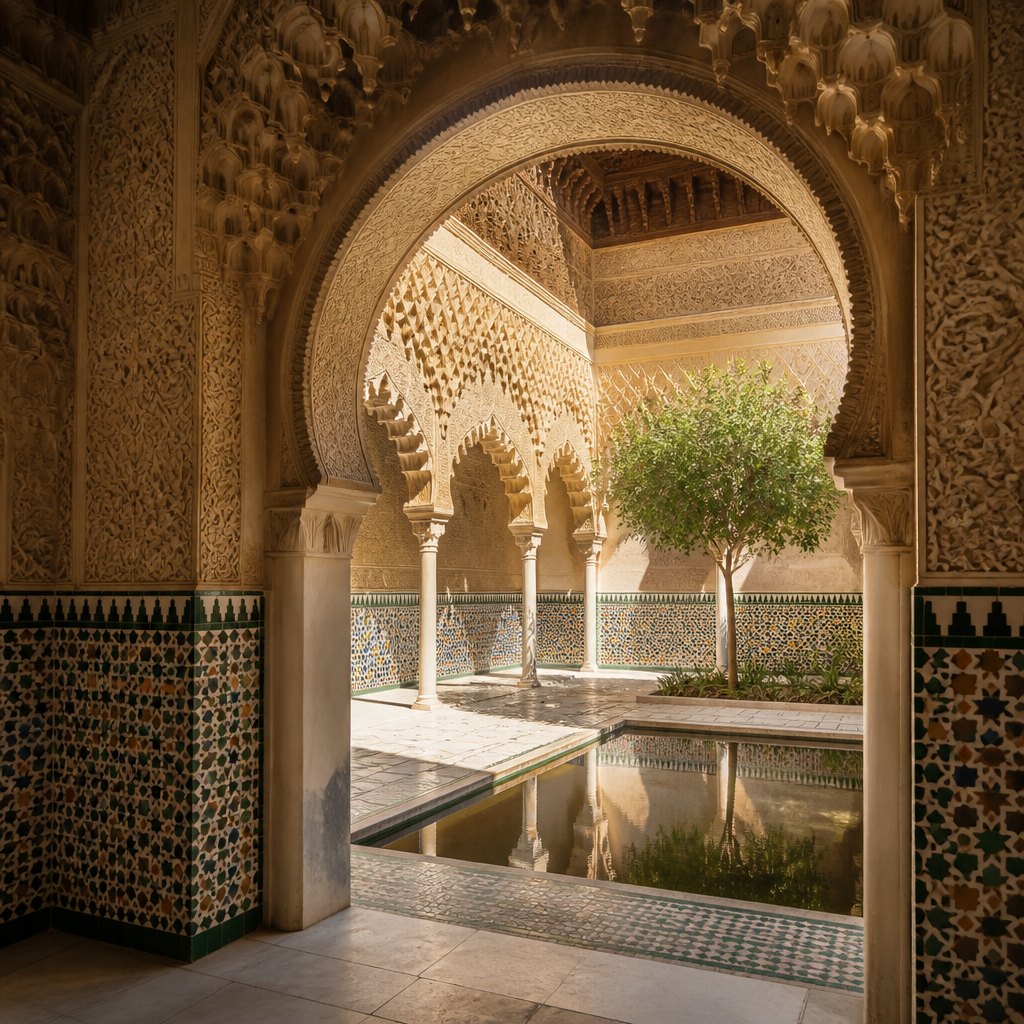 AI-generated
Work en plein air
Paint in the light of Granada
This example was generated from a prompt like: “An imagined palace courtyard with a geometric tile dado, carved stucco arabesque walls, a honeycomb muqarnas ceiling, and a still reflecting pool, lit by soft afternoon light through a horseshoe archway.”
Open the Granada Art Style generator →The place today
The Alhambra is Spain's most visited monument, managed as a UNESCO World Heritage site with timed ticket entry to protect its interiors. The Palacio de Carlos V within its walls now houses a museum, and the Generalife gardens remain open to visitors. Nearby workshops continue Granada's ceramic tradition, including glazed Fajalauza pottery, and marquetry craftsmen still produce taracea woodwork using techniques associated with the city's historic decorative arts.
Compose your own
Build pattern from geometry rather than figures: interlock stars, polygons, and vegetal scrollwork into continuous repeating fields rather than isolated pictures. Layer materials by height, cut-tile mosaic low on the wall, carved stucco above it, muqarnas cells at the ceiling, so the eye moves from hard geometric pattern to soft honeycomb texture. Run a calligraphic band as a frieze between zones. Favor a palette of turquoise, cobalt, gold, and warm plaster white, and treat a still reflecting pool as part of the composition, doubling the architecture in water.
Frequently asked questions
What is muqarnas?
A form of ornamental vaulting built from small stacked, stalactite-like plaster or stone cells, used in domes and niches to create a honeycomb texture that catches and scatters light.
Why is there no figural imagery in the Alhambra's decoration?
Courtly and religious convention in Nasrid Granada avoided figural representation in formal architectural settings, so decoration developed instead through geometric pattern, vegetal arabesque, and calligraphy.
How does Alhambra decoration relate to earlier Andalusi art in Córdoba and Seville?
It continues the same tile, stucco, and geometric traditions developed in those earlier centers, refined and concentrated within a single fortified palace complex during Granada's final century of Muslim rule.
Can visitors still see the Alhambra's original colors?
Some carved stucco retains traces of original paint and gilding, though centuries of exposure have faded most surfaces to bare plaster and stone, and conservation work continues to study and stabilize remaining pigment.