 Art
Art
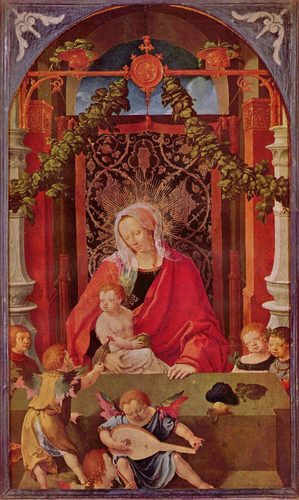
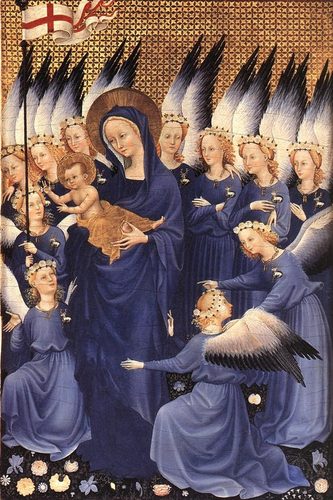
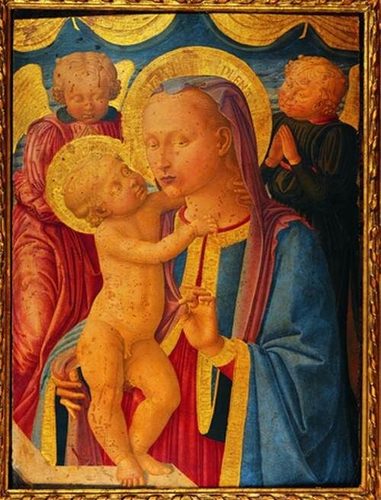
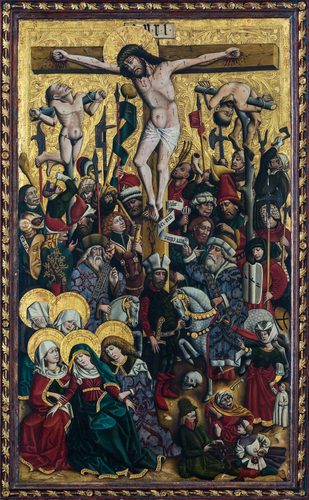
Ferrara became a distinct Renaissance art center under the Este family, who ruled the city from the 1200s and turned their court into a showcase of astrology, humanist scholarship, and painting through the 1400s and early 1500s. Isolated from Florence's naturalism and Venice's color, Ferrarese painters developed a harder, more linear style, angular drapery, metallic surfaces, and compressed, anxious figures, shaped partly by exposure to Netherlandish panels and to the sculptural intensity of Andrea Mantegna working nearby in Padua. Duke Borso d'Este commissioned the Palazzo Schifanoia's Hall of the Months in the late 1460s, a fresco cycle combining classical mythology, court life, and astrological decans devised with input from the university's astrologers, one of the most complete secular fresco programs to survive from the period. Este patronage also sustained a major manuscript-illumination workshop. Later, under Duke Alfonso I, court taste shifted toward Venetian color and myth, drawing commissions from Bellini and Titian.
What marks the region
Hard, linear drapery
Ferrarese figures wear drapery folded in sharp, almost metallic creases rather than soft Florentine fabric, a look traced to local goldsmith training and exposure to Mantegna's sculptural style.
Astrological fresco programs
Palace decoration drew directly on the University of Ferrara's astrologers, translating zodiac decans and planetary hours into full-wall mythological and courtly imagery.
Compressed, anxious space
Figures crowd tightly within their panels, with little of the airy Florentine perspective, giving Ferrarese painting a nervous, coiled energy distinct from its neighbors.
Manuscript illumination alongside panel painting
The Este court sustained a major scriptorium producing lavishly illuminated bibles and choir books, treating manuscript decoration as equal in status to wall and panel painting.
Court-controlled iconography
Subjects and allegorical programs were devised by court humanists and astrologers before painters began work, making Ferrarese fresco cycles closer to illustrated texts than free invention.
Later shift to Venetian color
Under Alfonso I d'Este in the early 1500s, the earlier hard linear style softened toward Venetian glazing and mythological subject matter, imported through commissions to Bellini and Titian.
Local signatures
How to spot Ferrara art
- Zodiac decans
- → Personified thirty-six-degree divisions of the zodiac, painted alongside Roman gods, marking Ferrara's court astrology in fresco form.
- Hard, rock-like drapery folds
- → Sharp-edged, almost carved-looking fabric, the clearest fingerprint of the Ferrarese hand across panels and frescoes.
- Este heraldic devices
- → Diamond rings, coats of arms, and family emblems worked into borders and backgrounds to assert ducal ownership.
- Elongated, angular figures
- → Stretched limbs and tense poses distinguishing Ferrarese painting from the rounder forms of Florence or Umbria.
- Grotesque ornamental borders
- → Fantastical hybrid creatures framing manuscript pages and fresco panels, borrowed from classical decorative motifs revived at court.
- Triumphal procession scenes
- → Chariot processions of gods or months across a wall, a recurring format for Este court fresco cycles.
The story
The Este family governed Ferrara from the 1200s and turned it into a major court from the mid-1400s under Leonello, Borso, and Ercole I d'Este. Borso, duke from 1450 to 1471, commissioned the Palazzo Schifanoia's Hall of the Months around 1469-70, painted largely by Francesco del Cossa, Cosmè Tura, and Ercole de' Roberti under an astrological program set with the university's scholars. Tura, appointed court painter in 1458, defined the school's hard, angular manner; Ercole de' Roberti succeeded him around 1486. The Flemish painter Rogier van der Weyden passed through Ferrara around 1450, and his work left a visible mark on local painters' interest in precise detail. The Este scriptorium produced illuminated manuscripts including the Bible of Borso d'Este, completed by 1461. Under Duke Alfonso I d'Este, ruling from 1505 to 1534, court taste turned toward Venice, with Giovanni Bellini and Titian contributing mythological paintings for his private study. Ferrara passed to direct papal control in 1598 after the Este male line failed.
Masterpieces of the place
| Work | Artist | Date | Why it matters |
|---|---|---|---|
| Hall of the Months, Palazzo Schifanoia | Francesco del Cossa, Cosmè Tura, and Ercole de' Roberti | c. 1469-1470 | A fresco calendar pairing zodiac decans, classical gods, and scenes of Borso d'Este's court across twelve wall sections. |
| Bible of Borso d'Este | Taddeo Crivelli and workshop | 1455-1461 | A two-volume illuminated manuscript produced for the duke, among the most lavish of the Italian Renaissance. |
| Roverella Altarpiece (fragments) | Cosmè Tura | c. 1470s | A dismembered altarpiece whose surviving panels show the hard, metallic drapery style typical of the court painter's late work. |
| Allegory of April, Triumph of Venus | Francesco del Cossa | c. 1469-1470 | One panel of the Schifanoia cycle, combining a mythological triumph with contemporary court portraits below. |
| Feast of the Gods | Giovanni Bellini, completed by Titian | 1514, altered 1529 | A mythological banquet painted for Alfonso I d'Este's private study, marking the court's turn toward Venetian style. |
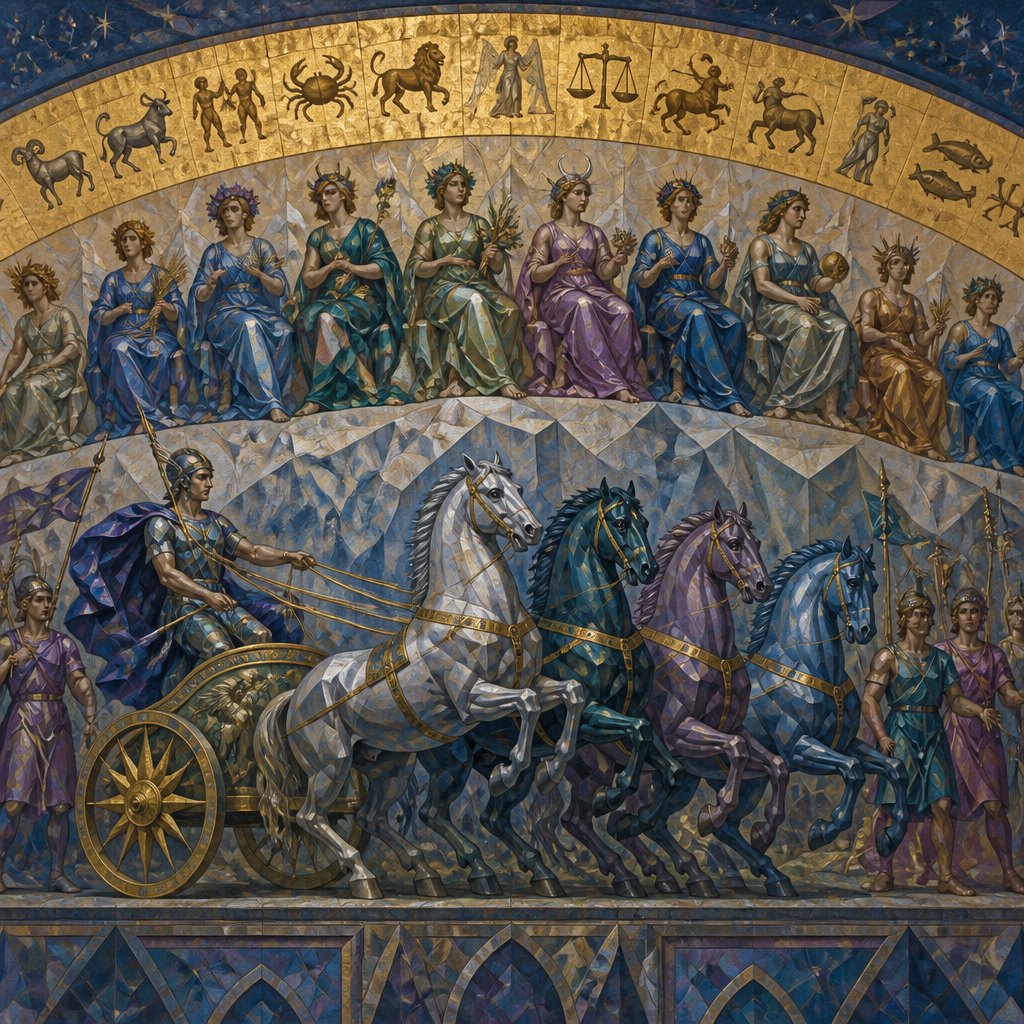 AI-generated
Work en plein air
Paint in the light of Ferrara
This example was generated from a prompt like: “A palace hall fresco of a chariot procession beneath zodiac signs and personified months, figures in hard, angular drapery rendered in cool, metallic jewel tones against a gilded sky band.”
Open the Ferrara Art Style generator →The place today
Palazzo Schifanoia remains open in Ferrara, its Hall of the Months among the best-preserved secular fresco cycles from Renaissance Italy. The Pinacoteca Nazionale di Ferrara holds panels by Tura, Cossa, and Ercole de' Roberti, while the moated Castello Estense, the family's fortified residence, still dominates the city center. The Bible of Borso d'Este is kept at the Biblioteca Estense in nearby Modena, where the Este court's library relocated. Ferrara's compact Renaissance street plan, expanded under Duke Ercole I in the 1490s, survives largely intact and is recognized as a planning landmark.
Compose your own
Draw drapery in hard, angled folds that look almost carved rather than soft cloth falling under gravity, the single most recognizable Ferrarese habit. Compress the figures into a shallow, crowded space rather than opening up deep Florentine perspective, giving the scene a tense, coiled energy. If building a fresco-style composition, organize it in horizontal registers, a mythological triumph above, courtly or everyday activity below, echoing the Schifanoia format. Add zodiac or planetary symbols worked into the border or background rather than the main action. Keep colors slightly cool and metallic rather than warm, and let ornamental grotesques twist around any framing border. Reserve softer, warmer glazing only if evoking the school's later Venetian-influenced phase.
Frequently asked questions
What makes Ferrarese Renaissance painting distinct?
A hard, linear, almost metallic drapery style and compressed, tense compositions, shaped by local goldsmith training and exposure to Mantegna, set it apart from Florence's naturalism and Venice's color.
What is the Palazzo Schifanoia fresco cycle about?
A twelve-month calendar combining classical gods, zodiac decans, and scenes of Duke Borso d'Este's court, painted around 1469-70 by Francesco del Cossa, Cosmè Tura, and Ercole de' Roberti.
Did Ferrara's style change over time?
Yes. Under Duke Alfonso I in the early 1500s, court taste shifted toward Venetian color and mythology, with Bellini and Titian contributing paintings, softening the earlier hard Ferrarese manner.
Where is Este court art kept today?
Chiefly in Ferrara's Pinacoteca Nazionale and Palazzo Schifanoia, with the illuminated Bible of Borso d'Este now held at the Biblioteca Estense in Modena.