 Art
Art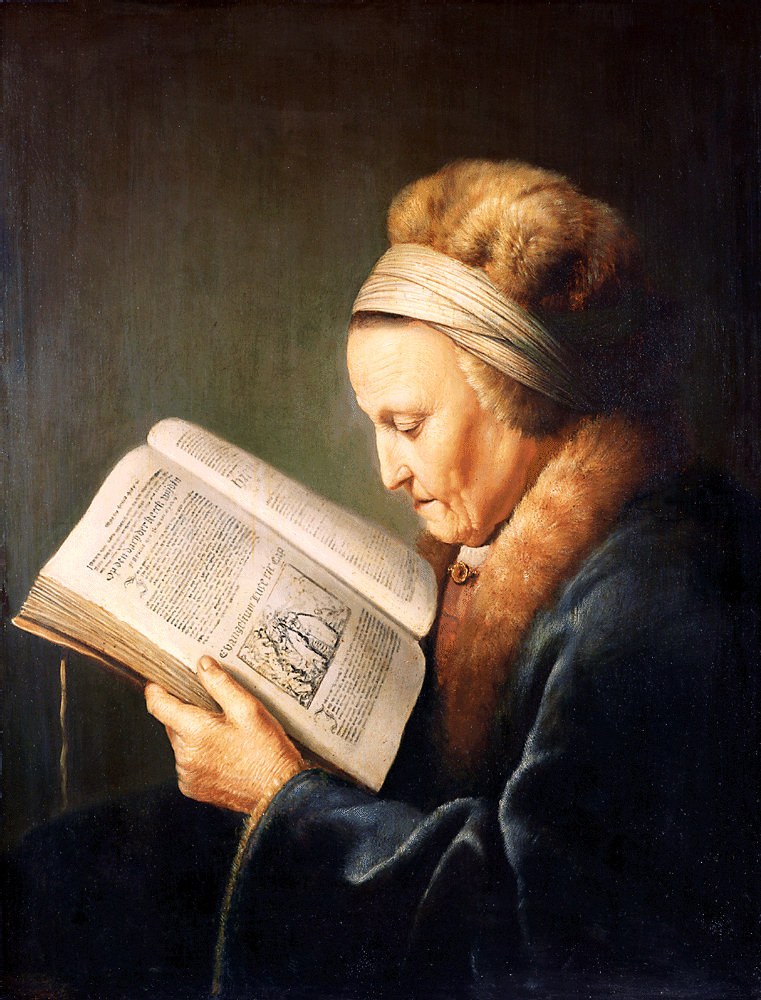
Leiden art refers to the painting produced in this Dutch university and cloth-manufacturing town chiefly between the 1620s and the 1680s, centered on the so-called fijnschilders, or 'fine painters.' The city's wealth came from laken, the fine woolen cloth woven and finished in its guildhalls, and from Leiden University, founded in 1575, which gave the town an unusually literate, comfortable merchant and professional class eager for small, precious pictures for private rooms rather than large public commissions. Rembrandt van Rijn was born here in 1606 and ran an early studio in the city before moving to Amsterdam in 1631-32; his pupil Gerrit Dou stayed and turned Rembrandt's early chiaroscuro into something smoother, smaller, and almost enamel-like, founding a distinct local style. Leiden painters worked on tiny oak or copper panels, built up in nearly invisible brushstrokes, favoring candlelit interiors, moralizing genre scenes, and inventive niche-window framing devices that turned a painting into a small stage glimpsed through a stone opening.
What marks the region
Niche-window framing
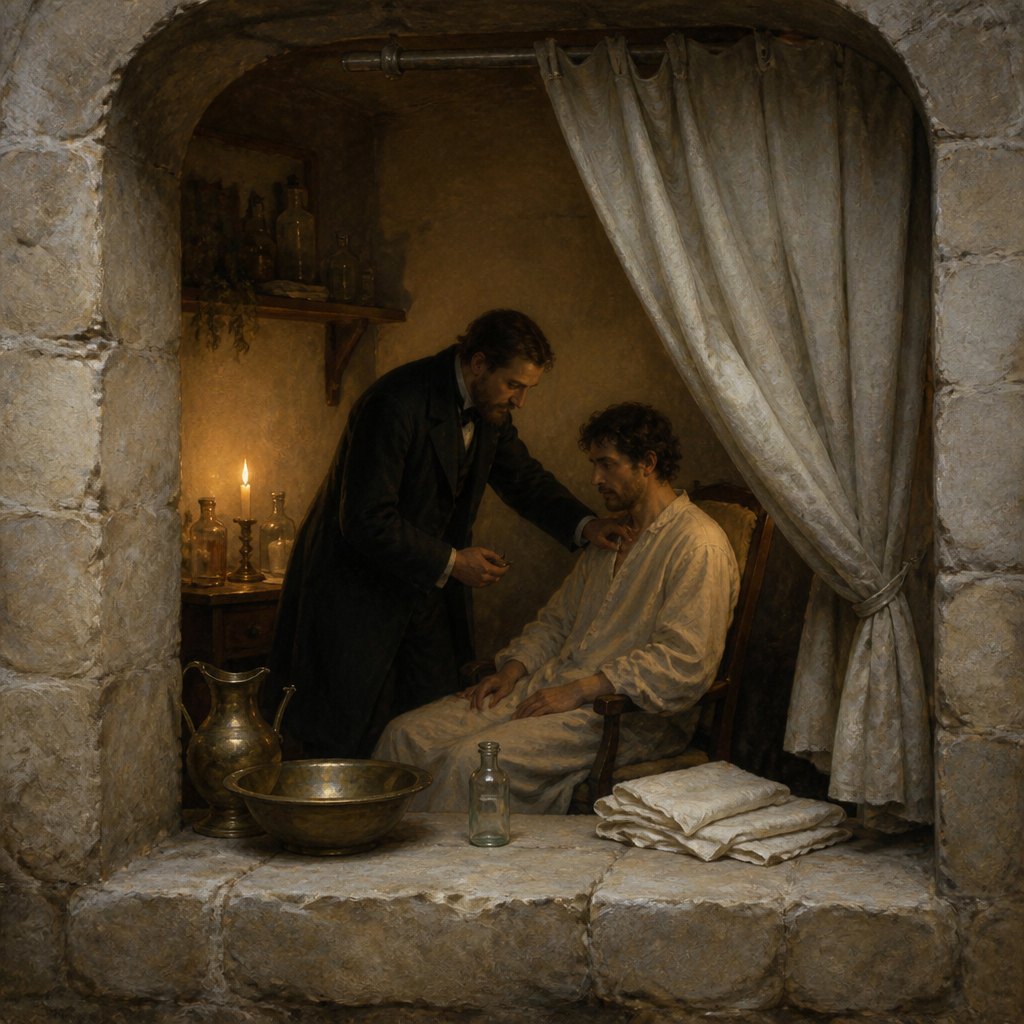
Gerrit Dou popularized paintings framed by a carved stone niche or curtain, turning the panel into a small stage glimpsed through a window rather than a flat surface.
Enamel-smooth finish
Brushstrokes were blended away entirely, producing a glassy, jewel-like surface that could take weeks longer to complete than a comparable Amsterdam genre scene.
Single-source lighting
A candle, oil lamp, or shaft of window light usually drives the composition, letting painters show off their control of cast shadow and reflected glow.
Moralizing genre subjects
Doctor's visits, drunken households, and flirting maids carried gentle moral warnings for buyers, a habit so associated with one painter that 'a Jan Steen household' became a Dutch expression.
Small cabinet scale
Panels were made for private studies and cabinets, not churches or town halls, and stayed small enough to hold in two hands.
Master-to-pupil lineage
A tight chain of apprenticeship ran from Rembrandt to Dou to Frans van Mieris and Godfried Schalcken, each pupil inheriting and refining the same fine technique.
Local signatures
How to spot Leiden art
- Stone niche and drawn curtain
- → Dou's signature framing device, implying the viewer has just pulled back a curtain on a private scene.
- Single candle or oil lamp
- → A display of technical control over cast light and shadow, prized above the subject itself.
- Caged songbird
- → Domestic virtue or a woman's constrained position within the household.
- Doctor at a young woman's bedside
- → A stock comic subject read as lovesickness or unwanted pregnancy rather than real illness.
- Open book or globe
- → A nod to Leiden's university culture and the learning that set the city apart from purely mercantile towns.
- Broom, pipe, or overturned jug
- → Signs of a disorderly household, the moral counterpoint in genre scenes warning against idleness.
The story
Leiden survived a Spanish siege in 1574 and was rewarded the following year with the Dutch Republic's first university, giving the town a literate elite alongside its established cloth trade. Rembrandt van Rijn, born in Leiden in 1606, trained locally before sharing a studio with Jan Lievens from about 1625, developing the dramatic light effects he later took to Amsterdam in 1631-32. His pupil Gerrit Dou, born in Leiden in 1613, stayed behind and by the 1640s had built a market for small, minutely finished panels, becoming the city's best-paid painter. Leiden's Guild of St Luke, chartered in 1648, formalized the fijnschilder trade, and painters such as Frans van Mieris the Elder and, later, Jan Steen, who settled in Leiden and served as guild dean, carried the style into the 1670s-80s. The tradition continued through Willem van Mieris into the early 1700s before Leiden's painting market faded alongside its cloth industry.
Masterpieces of the place
| Work | Artist | Date | Why it matters |
|---|---|---|---|
| Self-Portrait | Rembrandt van Rijn | c. 1629 | Painted in Leiden before the artist's move to Amsterdam, already showing dramatic self-taught chiaroscuro. |
| The Dropsical Woman | Gerrit Dou | 1663 | A niche-framed sickroom scene showing the fijnschilder obsession with texture and staged light. |
| The Doctor's Visit | Jan Steen | c. 1660s | A comic sickbed scene from the stock Leiden genre subject of lovesickness disguised as illness. |
| The Duet | Frans van Mieris the Elder | 1658 | Polished, jewel-toned surfaces typical of Dou's most successful pupil. |
| Tobit and Anna | Rembrandt van Rijn | 1626 | One of Rembrandt's earliest surviving Leiden panels, made before his mature style formed. |
 AI-generated
Work en plein air
Paint in the light of Leiden
This example was generated from a prompt like: “A small candlelit sickroom glimpsed through a stone window niche with a half-drawn curtain: a doctor leaning over a seated patient, a brass basin, glass bottles, and folded linens rendered in glassy, minutely blended detail.”
Open the Leiden Art Style generator →The place today
Museum De Lakenhal, housed in Leiden's former cloth hall, holds Rembrandt's earliest paintings alongside Lucas van Leyden and the fijnschilders, reopened after renovation in 2019. Leiden University, the oldest in the Netherlands, still anchors the city's identity. Rembrandt's birthplace is marked with a plaque near the Galgewater, and the compact canal-ringed center, largely unchanged since the 1600s, still reads as the setting for the genre scenes painted inside it.
Compose your own
Work small and finish completely: choose a panel no larger than a book, then blend every brushstroke until the surface looks glazed rather than painted. Light the scene from one source only, a candle or a narrow window, and let it fall across a few textured objects, glass, fur, brass, rendered with more patience than the figures themselves. Frame the composition with an implied stone niche or a half-drawn curtain at the edge, as if the viewer has stepped up to a window. Keep the subject domestic and slightly moralizing, a sickroom visit or a scolding maid, and leave the emotional temperature quiet rather than theatrical.
Frequently asked questions
What does 'fijnschilder' mean?
It is Dutch for 'fine painter,' referring to a 17th-century Leiden style built on minute, enamel-smooth detail and small scale, led by Gerrit Dou and his pupils.
Did Rembrandt paint in the Leiden style?
His early Leiden work from the 1620s shares the same small scale and dramatic light, but after moving to Amsterdam in 1631-32 he developed the looser, broader brushwork for which he is best known.
Why is Jan Steen's name used as a Dutch expression?
His chaotic household genre scenes were so recognizable that 'a Jan Steen household' became Dutch shorthand for a disorderly home, even for people who have never seen his paintings.
Why did Leiden's painting market decline?
The city's cloth industry weakened through the late 1600s, and demand shifted toward Amsterdam and The Hague; by the early 1700s only Willem van Mieris carried the fijnschilder tradition forward.