 Art
Art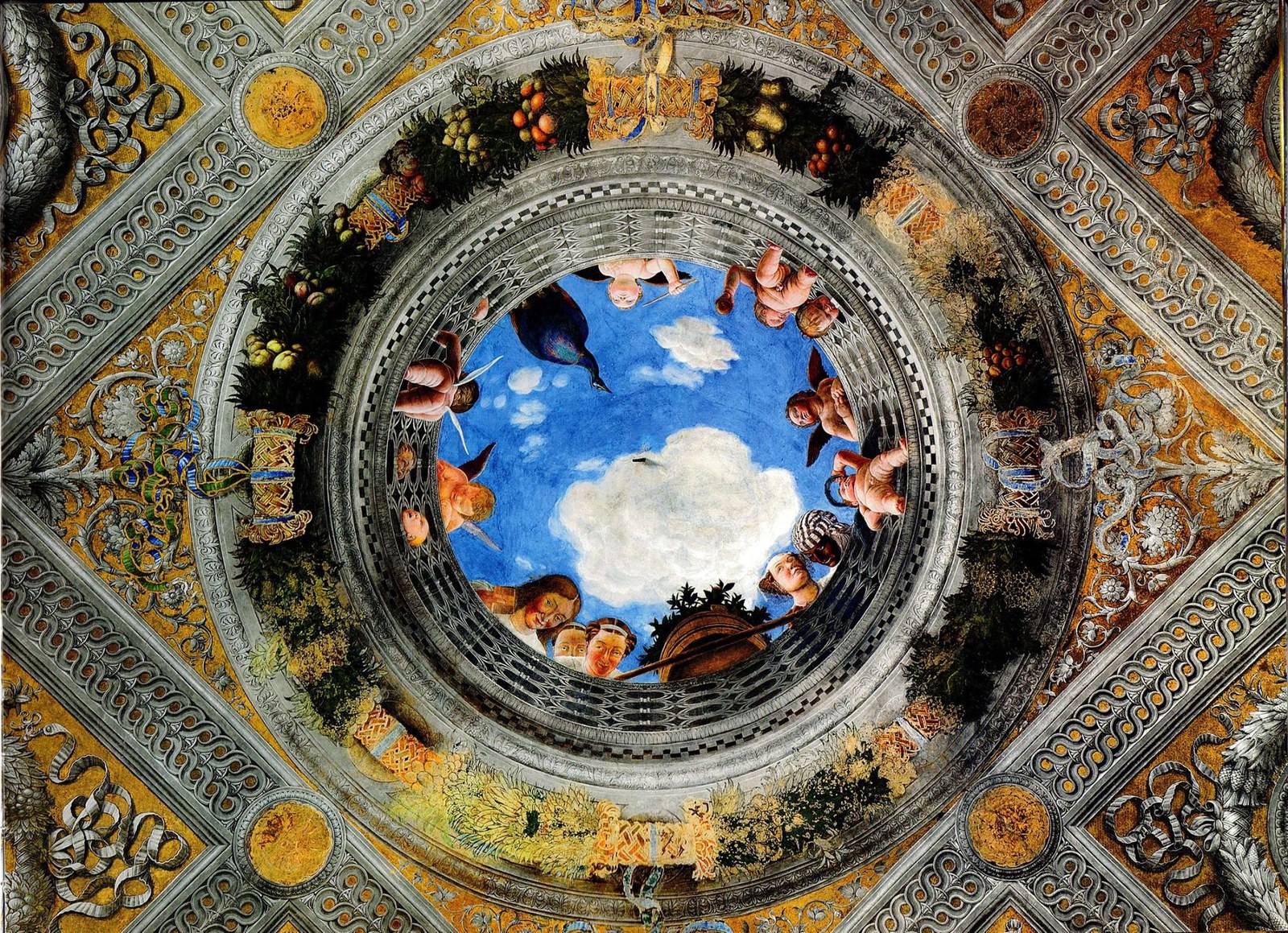
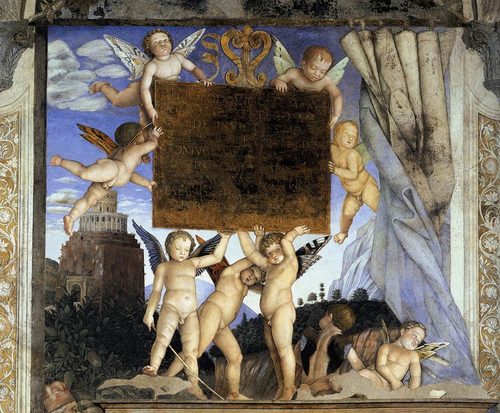
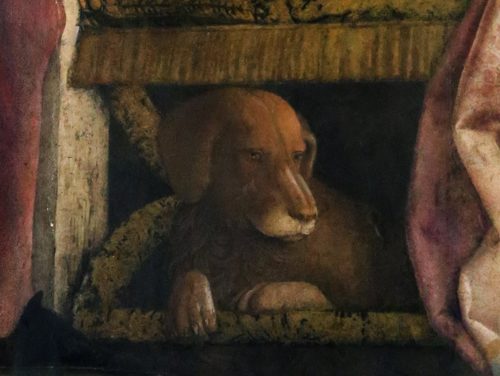
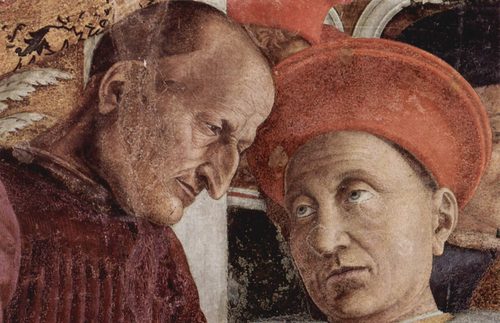
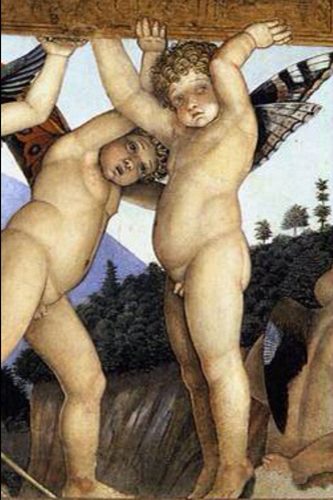
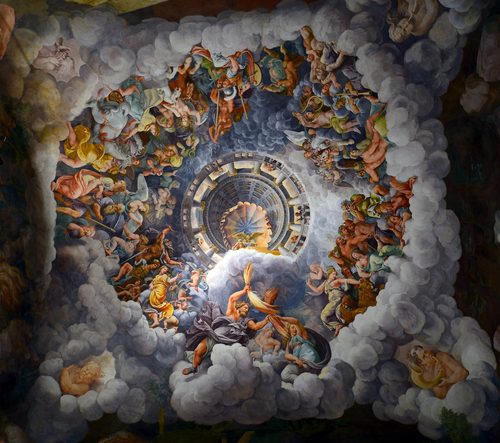
Mantua became a major Renaissance art center under the Gonzaga family, who ruled the city from 1328 and used art systematically to project dynastic authority to visiting popes, emperors, and rival courts. Marquess Ludovico II Gonzaga brought Andrea Mantegna to Mantua as court painter around 1460, and Mantegna's Camera degli Sposi, completed in 1474, covered a small ducal bedroom with frescoed courtiers, landscapes, and a painted oculus opening onto a foreshortened sky, one of the first fully illusionistic interiors of the Renaissance. Later, Federico II Gonzaga hired Giulio Romano, a pupil of Raphael, to design and decorate the Palazzo Te between 1524 and 1534 as a suburban pleasure palace, filling its rooms with mythological cycles, illusionistic collapsing architecture, and grotesque ornament drawn from ancient Roman models. Court art in Mantua depended entirely on Gonzaga wealth and taste rather than church or guild patronage, giving painters unusual freedom to invent elaborate mythological and allegorical programs tailored to a single family's self-image.
What marks the region
Dynastic self-portraiture
Gonzaga family members and courtiers appear as recognizable participants within mythological or historical scenes, blending portraiture with allegory to assert dynastic presence.
Illusionistic oculus ceilings
Painted openings in ceilings reveal a foreshortened sky or balcony of figures looking down, a device Mantegna pioneered and Giulio Romano later expanded.
Mythological decoration cycles
Entire palace rooms were devoted to single myths, Cupid and Psyche or the fall of the Giants, chosen to flatter or amuse a specific Gonzaga patron.
Antique grotesque ornament
Borders and ceilings use small mythological creatures, garlands, and fantastical hybrids copied from newly excavated Roman decoration, popular after Rome's grotto discoveries.
Fresco and stucco combined
Painted scenes were framed by three-dimensional stucco relief, blurring the line between painted illusion and actual architectural sculpture.
Suburban pleasure palace design
Palazzo Te was built and decorated as a retreat for entertainment and horse breeding rather than governance, giving its imagery a lighter, more playful register than ducal state rooms.
Local signatures
How to spot Mantua art
- Painted oculus with figures looking down
- → A trompe l'oeil opening to the sky populated by putti or courtiers, Mantua's signature illusionistic ceiling device.
- Gonzaga eagle and dynastic emblems
- → Family heraldry worked into decorative borders, asserting Gonzaga ownership even within mythological scenes.
- Horses in decorative cycles
- → Life-size painted horses reference the Gonzaga stud farm, a major source of the family's wealth and prestige.
- Collapsing giant architecture
- → Illusionistic tumbling stonework at Palazzo Te's Sala dei Giganti, immersing viewers in a mythological catastrophe.
- Cupid and Psyche mythology
- → A recurring myth of desire and trial used to decorate private Gonzaga apartments with erotic and allegorical content.
- Grotesque hybrid ornament
- → Small part-human, part-animal decorative figures copied from ancient Roman grottoes, marking a room as fashionably antique.
The story
The Gonzaga family took control of Mantua in 1328 and ruled continuously into the 1700s, using art as a tool of diplomacy and prestige. Marquess Ludovico II Gonzaga brought Andrea Mantegna to court around 1460; Mantegna's Camera degli Sposi, a frescoed ducal bedroom, was completed in 1474 and remains one of the earliest fully illusionistic Renaissance interiors. Mantegna also produced the multi-canvas Triumphs of Caesar between 1484 and 1492 for the Gonzaga court, later sold to England in the 1620s. Federico II Gonzaga, elevated to Duke in 1530, commissioned Giulio Romano, trained under Raphael in Rome, to build and decorate the Palazzo Te from 1524 to 1534. Financial strain in the 1600s led the Gonzaga to sell much of their art collection to England's Charles I in 1627-28, a sale now studied as one of the largest single dispersals of a princely collection. Austrian Habsburg forces annexed Mantua in 1708, ending Gonzaga rule and the court patronage system that had sustained the city's art production.
Masterpieces of the place
| Work | Artist | Date | Why it matters |
|---|---|---|---|
| Camera degli Sposi (Camera Picta) | Andrea Mantegna | 1465-74 | A frescoed ducal bedroom with a painted oculus, among the earliest fully illusionistic interiors of the Renaissance. |
| Triumphs of Caesar | Andrea Mantegna | 1484-92 | A nine-canvas series for the Gonzaga court celebrating ancient Roman triumph, sold to England in the 1620s. |
| Sala di Psiche, Palazzo Te | Giulio Romano | 1526-28 | A mythological fresco cycle on the tale of Cupid and Psyche, decorating a Gonzaga pleasure palace room. |
| Sala dei Giganti, Palazzo Te | Giulio Romano | 1532-34 | An immersive fresco of collapsing giants covering walls and ceiling, designed to disorient visitors physically. |
| Sala dei Cavalli, Palazzo Te | Giulio Romano and workshop | c. 1527-28 | Life-size portraits of prized Gonzaga horses, tying court decoration to the family's famous stud farm. |
Work en plein air
Paint in the light of Mantua
This example was generated from a prompt like: “A frescoed ducal room with a painted ceiling oculus opening onto a foreshortened sky, mythological figures along the walls, grotesque ornamental borders, and a life-size painted horse, in a rich courtly Renaissance palette.”
Open the Mantua Art Style generator →The place today
The Palazzo Ducale in Mantua still houses Mantegna's Camera degli Sposi, viewable by timed entry due to conservation limits on the small room. Palazzo Te, once a suburban retreat, now functions as a museum showing the Sala di Psiche and Sala dei Giganti largely intact. Mantua and the nearby planned town of Sabbioneta together hold UNESCO World Heritage status for their Renaissance urban and courtly architecture. Much of the original Gonzaga art collection left Italy in the 1600s and is now dispersed among major European museums, so Mantua's surviving strength lies in its frescoed interiors rather than portable paintings.
Compose your own
Build a scene around a single ceiling opening: paint a foreshortened sky, balcony, or ring of figures looking straight down at the viewer, the Mantuan illusionistic signature. Choose a mythological subject, Cupid and Psyche or a triumphal procession, and decorate its borders with small grotesque hybrid creatures and garlands copied from ancient Roman ornament. Include recognizable courtly figures, a duke, a favored horse, a page, folded into the mythological scene as if they belong there. Use fresco combined with three-dimensional stucco framing so painted and sculpted elements blur together. Keep the overall tone celebratory and slightly theatrical, court decoration meant to impress a visiting dignitary rather than devotional or private meditation.
Frequently asked questions
What is the Camera degli Sposi?
A small frescoed bedroom in Mantua's Palazzo Ducale, painted by Andrea Mantegna between 1465 and 1474, famous for a ceiling oculus that opens illusionistically onto a painted sky and balcony of figures.
Why did the Gonzaga build Palazzo Te?
Federico II Gonzaga commissioned it in 1524 as a suburban pleasure palace near his stud farm, decorated by Giulio Romano with mythological frescoes meant to entertain guests rather than serve as a seat of government.
What happened to the original Gonzaga art collection?
Financial pressure led the family to sell much of it to England's Charles I in 1627-28, one of the largest dispersals of a Renaissance princely collection, scattering major works across foreign royal and museum collections.
Who was Giulio Romano?
A painter and architect trained under Raphael in Rome who moved to Mantua in 1524 to work for the Gonzaga court, designing and decorating the Palazzo Te with mythological and illusionistic fresco cycles.