 Art
Art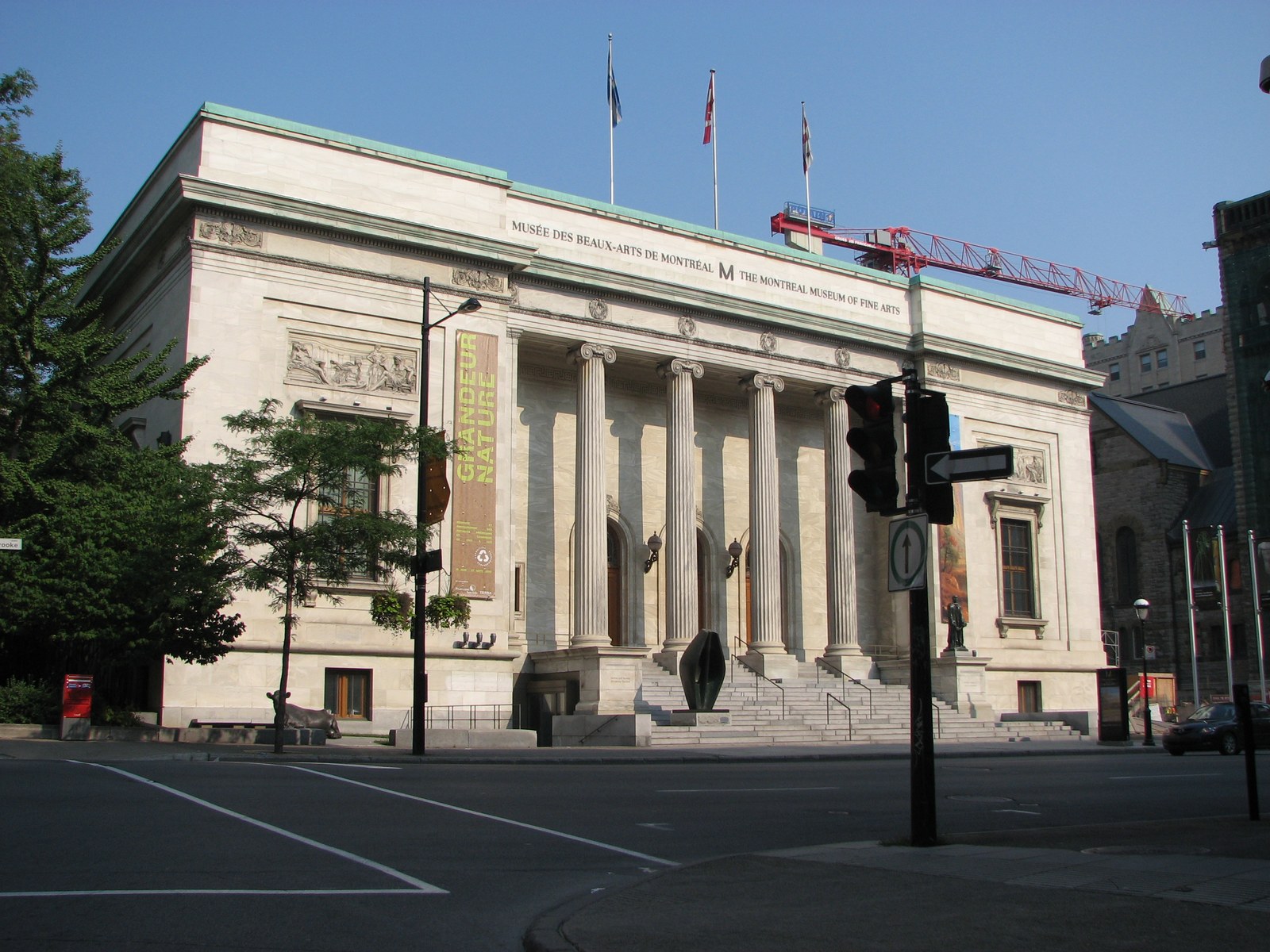
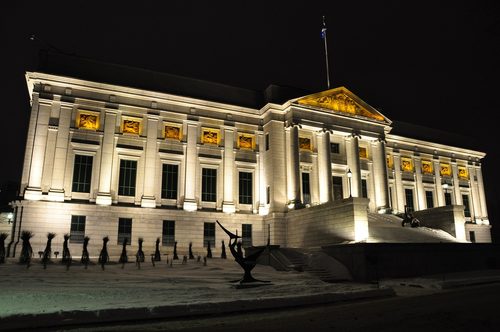
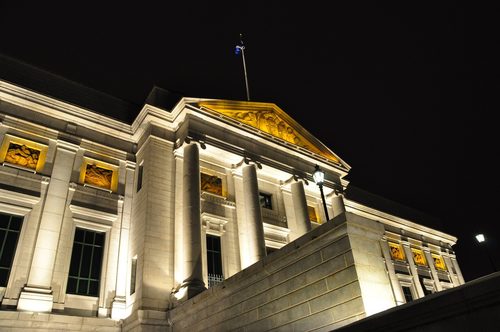
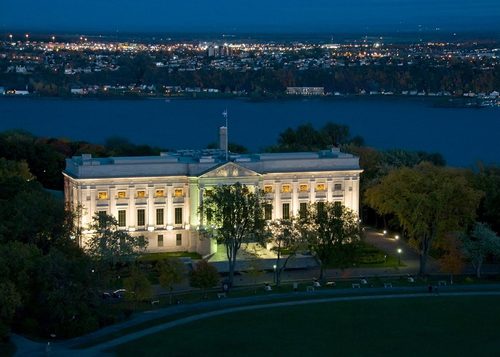
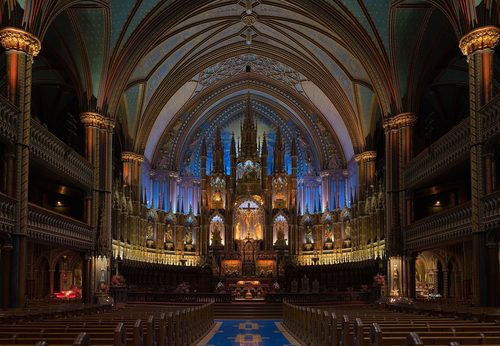
Montreal's mid-19th-century wealth from fur trading, banking, and shipping funded a Beaux-Arts building boom: Notre-Dame Basilica, completed 1829, the Art Association of Montreal, founded 1860 as forerunner to the Montreal Museum of Fine Arts, and the École des Beaux-Arts de Montréal, founded 1923, which trained academic painters and church muralists for the city's many Catholic parishes. Painters such as Marc-Aurèle de Foy Suzor-Coté combined that academic training with genre depictions of rural Quebec habitant life, sleighs and maple-sugar season among them. By the late 1930s a younger circle around teacher Paul-Émile Borduas, trained partly at that same academy, rejected its religious conservatism outright, painting in spontaneous, non-figurative gesture drawn from Surrealist automatism. Their 1948 manifesto Refus Global attacked clerical control of Quebec culture and is widely linked to the province's later Quiet Revolution. Montreal thus carries two distinct signatures within one century: careful Beaux-Arts and church decoration, and a deliberate rupture into abstraction.
What marks the region
Beaux-Arts academic training
Drawing from casts and life models, historical composition, and formal hierarchy of subject, taught at the École des Beaux-Arts de Montréal and applied to public and church commissions.
Church mural and decoration commissions
Painted ceilings, stained glass, and altar decoration for Montreal's numerous Catholic parishes gave academically trained painters steady, large-scale work outside easel painting.
Habitant genre painting
Rural Quebec subjects, sleighs, snow, maple sugaring, and village life, painted with academic finish, giving the province a recognizable genre distinct from urban Montreal itself.
Automatiste gesture
Rapid, unplanned mark-making derived from Surrealist automatism, deliberately avoiding recognizable subject matter, developed by a small circle from the late 1930s.
Manifesto-driven practice
Visual art tied to public written declarations, most notably the 1948 Refus Global, rather than gallery statements alone, linking painting directly to broader cultural argument.
Parallel Anglophone and Francophone institutions
The English-run Art Association and the Francophone-run Beaux-Arts school built two overlapping but distinct art tracks within the same city.
Local signatures
How to spot Montreal art
- Church spire silhouettes
- → Parish spires marking Montreal's dense Catholic institutional presence, recurring in cityscape views.
- Snow-covered sleigh scenes
- → Winter travel and rural habitant life, a defining genre subject distinct from urban Montreal painting.
- Grey limestone facades
- → Local building stone giving Montreal's Beaux-Arts and older institutional architecture its characteristic tone.
- Maple sap-bucket motifs
- → Sugaring-season imagery marking rural Quebec identity within genre and folk-adjacent painting.
- All-over gestural abstraction
- → Dense, edge-to-edge spontaneous mark-making with no horizon line, the Automatiste rejection of figuration.
- Fleur-de-lis architectural ornament
- → A recurring decorative motif in Quebec civic and church architecture tied to French colonial heritage.
The story
Notre-Dame Basilica, designed by James O'Donnell, was built in central Montreal between 1824 and 1829. The Art Association of Montreal was founded in 1860, and its purpose-built museum, designed by Edward and William Sutherland Maxwell, opened in 1912. The École des Beaux-Arts de Montréal opened in 1923, training a generation in academic and mural technique. From the late 1930s, painter and teacher Paul-Émile Borduas gathered a circle of younger artists exploring Surrealist automatism; in August 1948 sixteen of them signed the manifesto Refus Global, publicly rejecting clerical authority over Quebec culture. Several members, including Jean-Paul Riopelle, relocated to Paris in the early 1950s as the group dispersed. The Musée d'art contemporain de Montréal, founded in 1964, later institutionalized the abstract tradition the Automatistes had begun.
Masterpieces of the place
| Work | Artist | Date | Why it matters |
|---|---|---|---|
| Notre-Dame Basilica | James O'Donnell | 1824-1829 | A Gothic Revival landmark that established Montreal's Beaux-Arts and neo-Gothic institutional architecture. |
| Habitant genre scenes | Marc-Aurèle de Foy Suzor-Coté | c. 1900-1920s | Academically finished depictions of rural Quebec winter life, a signature Quebec genre subject. |
| Winter genre paintings | Cornelius Krieghoff | c. 1850s-1860s | Widely circulated habitant and winter scenes that established Quebec rural life as a marketable subject. |
| Montreal Museum of Fine Arts building | Edward and William Sutherland Maxwell | 1912 | A Beaux-Arts museum building constructed for the Art Association of Montreal's growing collection. |
| Chapelle Notre-Dame-de-Lourdes murals | Napoléon Bourassa | 1876-1880 | A full-interior mural program typical of the academically trained painter-architects working for Montreal's parishes. |
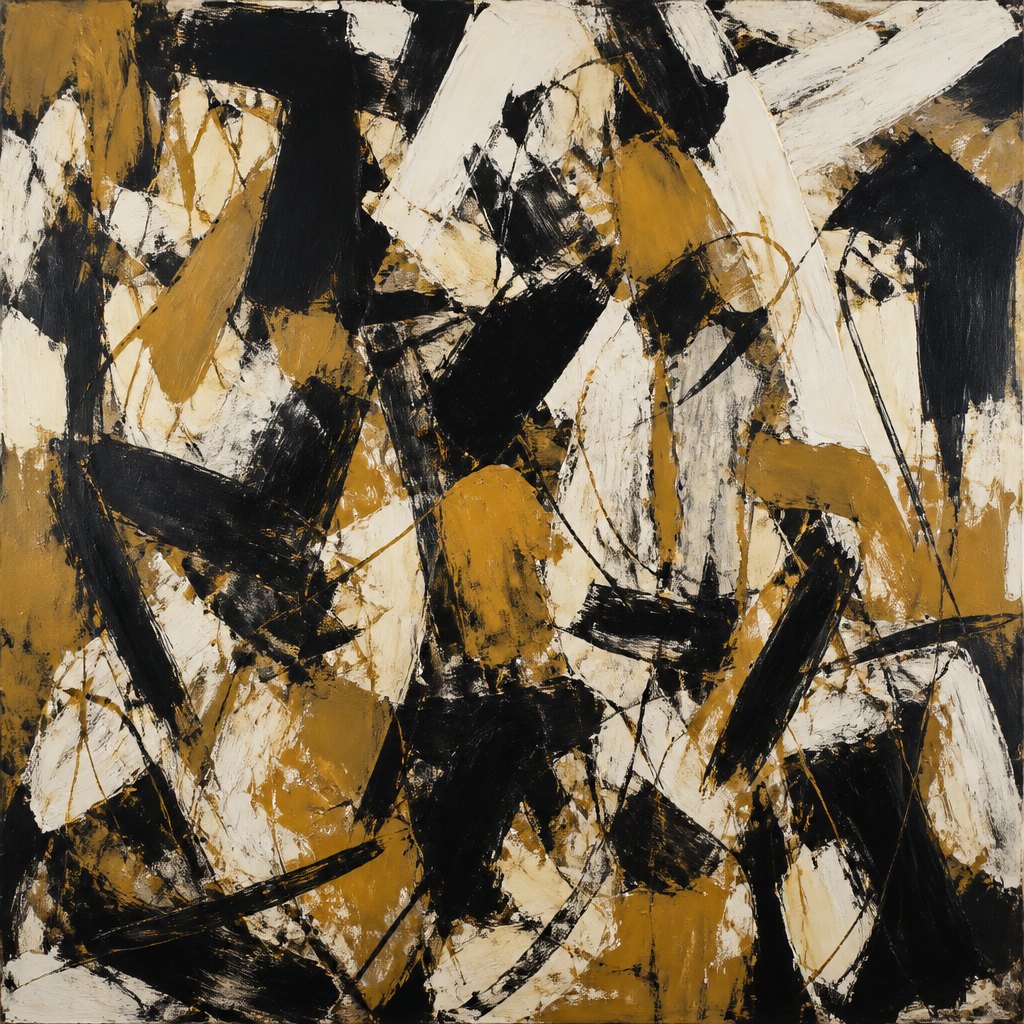 AI-generated
Work en plein air
Paint in the light of Montreal
This example was generated from a prompt like: “A dense abstract composition of overlapping black, ochre, and white gestural brushstrokes covering the entire canvas edge to edge, with no horizon, sky, or recognizable object, evoking spontaneous mid-century Quebec abstraction.”
Open the Montreal Art Style generator →The place today
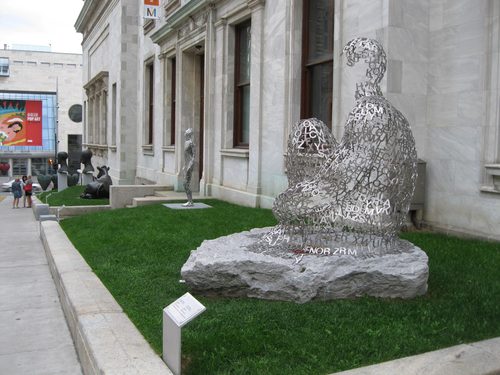
The Montreal Museum of Fine Arts continues to hold the Art Association's founding collection alongside later acquisitions. The Musée d'art contemporain de Montréal, opened 1964, carries forward the abstract tradition the Automatistes began. Notre-Dame Basilica remains an active parish and major visitor site. Church mural and stained-glass conservation continues as a specialized public craft tied directly to Montreal's dense inventory of 19th- and early 20th-century parish decoration.
Compose your own
For the Beaux-Arts and church-decoration register, use structured, symmetrical composition, muted historical color, and clearly hierarchical figure placement, as if painting for a vaulted ceiling or an academy jury. For habitant genre subjects, keep the palette cool and snow-bright, with small dark figures and sleighs set against white ground and grey stone villages. For the Automatiste register, work in dense, edge-to-edge gestural marks with no horizon, sky, or recognizable object, layering color rapidly and avoiding any planned outline, since spontaneity itself was the declared method. Do not mix the two registers within a single image; the school's identity rests on the sharpness of that break.
Frequently asked questions
What was Refus Global?
A manifesto published in August 1948 by sixteen Quebec artists and writers associated with Paul-Émile Borduas, rejecting clerical and academic control over Quebec culture and defending spontaneous, non-figurative art.
How does Montreal's Beaux-Arts tradition differ from its Automatiste movement?
Beaux-Arts training emphasized structured composition, historical subject, and church commissions from the 1800s onward. The Automatistes, active from the late 1930s, deliberately rejected that structure in favor of spontaneous, unplanned abstraction.
Who designed Notre-Dame Basilica in Montreal?
James O'Donnell, built between 1824 and 1829. The Gothic Revival design helped set the tone for Montreal's subsequent institutional and church architecture through the 19th century.
Is habitant genre painting the same as Automatiste painting?
No. Habitant painting depicts recognizable rural Quebec scenes, sleighs and winter villages, with academic finish. Automatiste work is deliberately non-figurative, built from spontaneous gesture rather than depicted subject matter.